As businesses across Saudi Arabia continue to invest in digital transformation under Vision 2030, technology has become central to daily operations and long-term growth. But with growing reliance on cloud platforms, business applications, and connected systems, managing IT has become more demanding than ever.
This is why many organizations are turning to managed IT services in Saudi Arabia. Instead of spending valuable time resolving IT issues, businesses can rely on a managed service provider (MSP) to proactively monitor, maintain, and secure their IT environment. This helps businesses reduce downtime, strengthen cybersecurity, and free up internal teams to focus on more strategic work.
Whether you're considering outsourcing IT for the first time or looking for a better MSP, this guide explains everything you need to know about managed IT services, including how they work, what's included, their business benefits, pricing models, and how to choose the right provider in Saudi Arabia.
What Are Managed IT Services?
Managed IT services allow businesses to outsource the day-to-day management of their IT environment to a Managed Service Provider (MSP). Instead of fixing problems after they disrupt operations, an MSP proactively monitors, maintains, and secures your systems to keep your business running without interruption.
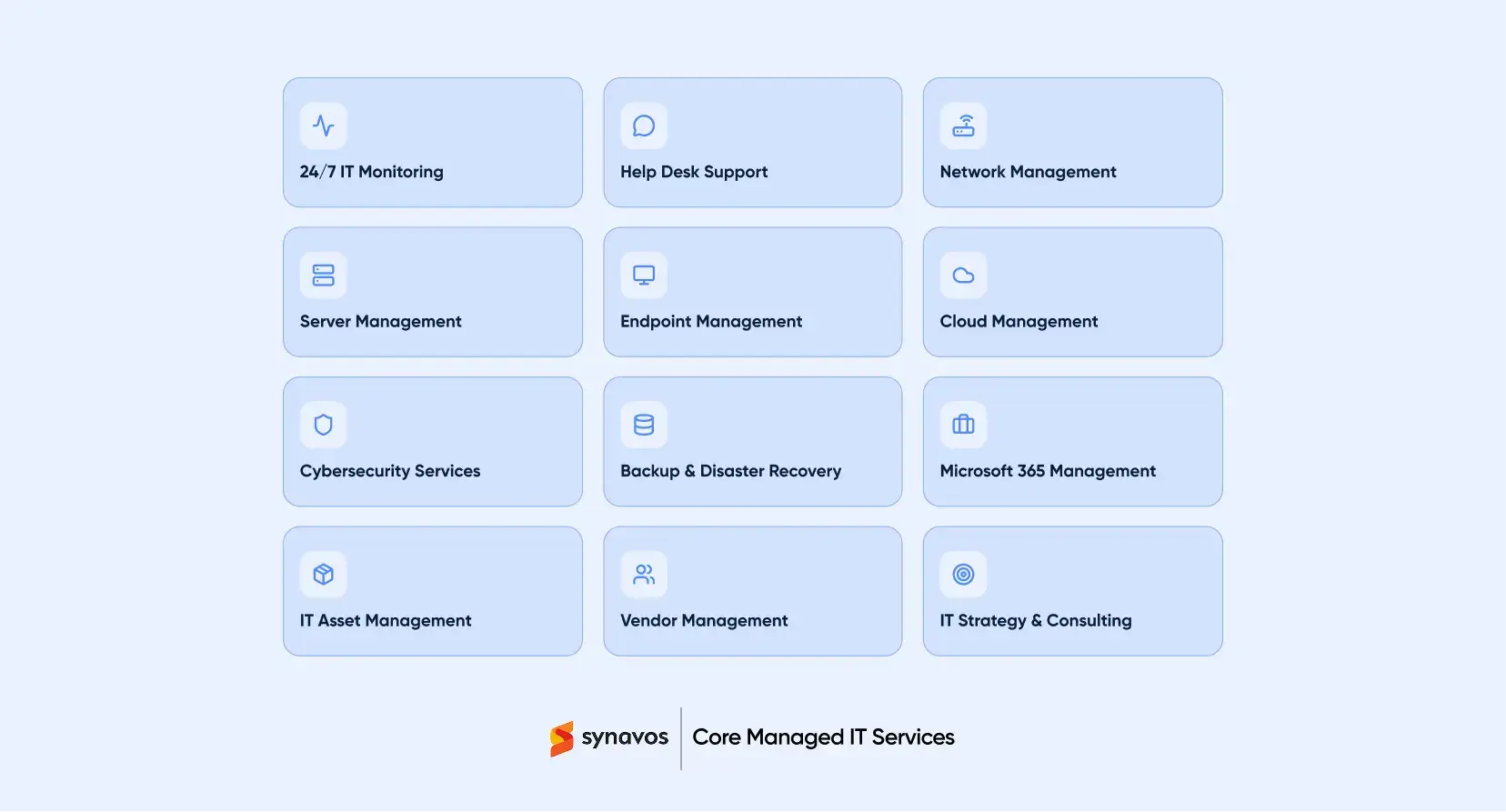
Depending on your business needs, managed IT services can include 24/7 IT monitoring, help desk support, network and server management, cloud services, cybersecurity, endpoint management, data backup and disaster recovery, Microsoft 365 administration, and IT consulting. For businesses in Saudi Arabia, this provides access to specialized expertise and enterprise-grade IT capabilities without the cost and complexity of expanding an internal IT team.
Why Businesses Across Saudi Arabia Are Choosing Managed IT Services
Over the past few years, the way Saudi businesses manage technology has changed significantly. As Saudi Arabia continues its digital transformation under Vision 2030, organizations are adopting cloud platforms, AI-powered solutions, and modern business applications to improve efficiency and remain competitive. While these investments create new opportunities, they also make IT environments more complex and harder to manage.
At the same time, businesses are expected to keep systems secure, support a growing digital workforce, prevent downtime, and stay ahead of increasingly sophisticated cyber threats. Building an in-house team with expertise across networking, cloud, cybersecurity, infrastructure, and user support isn't always practical or cost-effective. That's why more organizations across the Kingdom are choosing managed IT services to gain proactive IT management, specialized expertise, and predictable support without the overhead of expanding their internal IT departments.
What Services Are Included in Managed IT Services?
The scope of managed IT services varies from one business to another, depending on its size, industry, and technology requirements. Some organizations only need help with day-to-day IT support, while others rely on a managed service provider (MSP) to oversee their entire IT infrastructure.
Below are the core services most businesses in Saudi Arabia can expect from a managed IT provider:
24/7 IT Monitoring
Most IT issues don't happen without warning. Servers slow down, storage fills up, applications become unresponsive, and unusual network activity often appears before a failure occurs. With 24/7 IT monitoring, an MSP continuously tracks your IT environment, detects potential issues early, and resolves them before they impact business operations.
Help Desk Support
Technical issues are a part of every workplace, whether it's a login problem, software error, printer issue, or a device that won't connect to the network. Help desk support gives employees quick access to experienced IT professionals who diagnose and resolve these issues, minimizing downtime and helping teams stay productive.
Network Management
Your network connects employees, business applications, cloud services, and office locations. If network performance suffers, daily operations can quickly be affected. Network management keeps your infrastructure stable and secure by monitoring network performance, troubleshooting connectivity issues, managing firewalls, and maintaining network devices.
Server Management
Servers host the applications, databases, and files your business depends on every day. Without regular maintenance, they can become vulnerable to performance issues, security risks, and unexpected outages. Server management keeps them running reliably through continuous monitoring, software updates, security patching, performance optimization, and capacity planning.
Endpoint Management
Every laptop, desktop, smartphone, and tablet connected to your network can become a security risk if left unmanaged. Endpoint management keeps these devices secure by deploying software updates, applying security patches, enforcing security policies, and monitoring device health from a centralized platform.
Cloud Management
As more businesses move their applications and data to the cloud, managing cloud environments has become more complex. Cloud management helps keep platforms like Microsoft Azure and Microsoft 365 secure, optimized, and reliable by managing user access, monitoring performance, configuring security settings, and controlling cloud resources.
Cybersecurity Services
Cyber threats continue to grow in both volume and sophistication, making traditional security measures no longer enough. Managed cybersecurity services help protect your business through continuous security monitoring, endpoint protection, vulnerability management, patching, email security, and incident response, reducing the risk of data breaches and business disruption.
Backup & Disaster Recovery
Unexpected events such as ransomware attacks, hardware failures, or accidental file deletion can bring business operations to a halt. Backup and disaster recovery services ensure your critical data is regularly backed up and can be restored quickly to help your business recover with minimal downtime and data loss.
Microsoft 365 Management
Microsoft 365 is more than just email and document collaboration. Managing users, licenses, security settings, and compliance requires ongoing attention. A managed service provider takes care of these administrative tasks while keeping the platform secure, updated, and available for your workforce.
IT Asset Management
As businesses grow, keeping track of hardware, software, licenses, warranties, and other IT assets becomes increasingly difficult. IT asset management provides a clear view of these assets throughout their lifecycle, which helps businesses maintain accurate inventories, plan technology upgrades, manage software licenses, and avoid unnecessary IT costs.
Vendor Management
Most businesses work with multiple technology vendors, from internet providers and cloud platforms to software and hardware suppliers. Instead of dealing with each vendor separately, your managed service provider coordinates communication, resolves technical issues, and ensures services are delivered according to agreed standards.
IT Strategy & Consulting
Technology decisions have a direct impact on business performance, security, and future growth. IT strategy and consulting help businesses plan infrastructure upgrades, cloud adoption, cybersecurity initiatives, and long-term technology roadmaps, ensuring every IT investment supports broader business objectives.
How Do Managed IT Services Work?
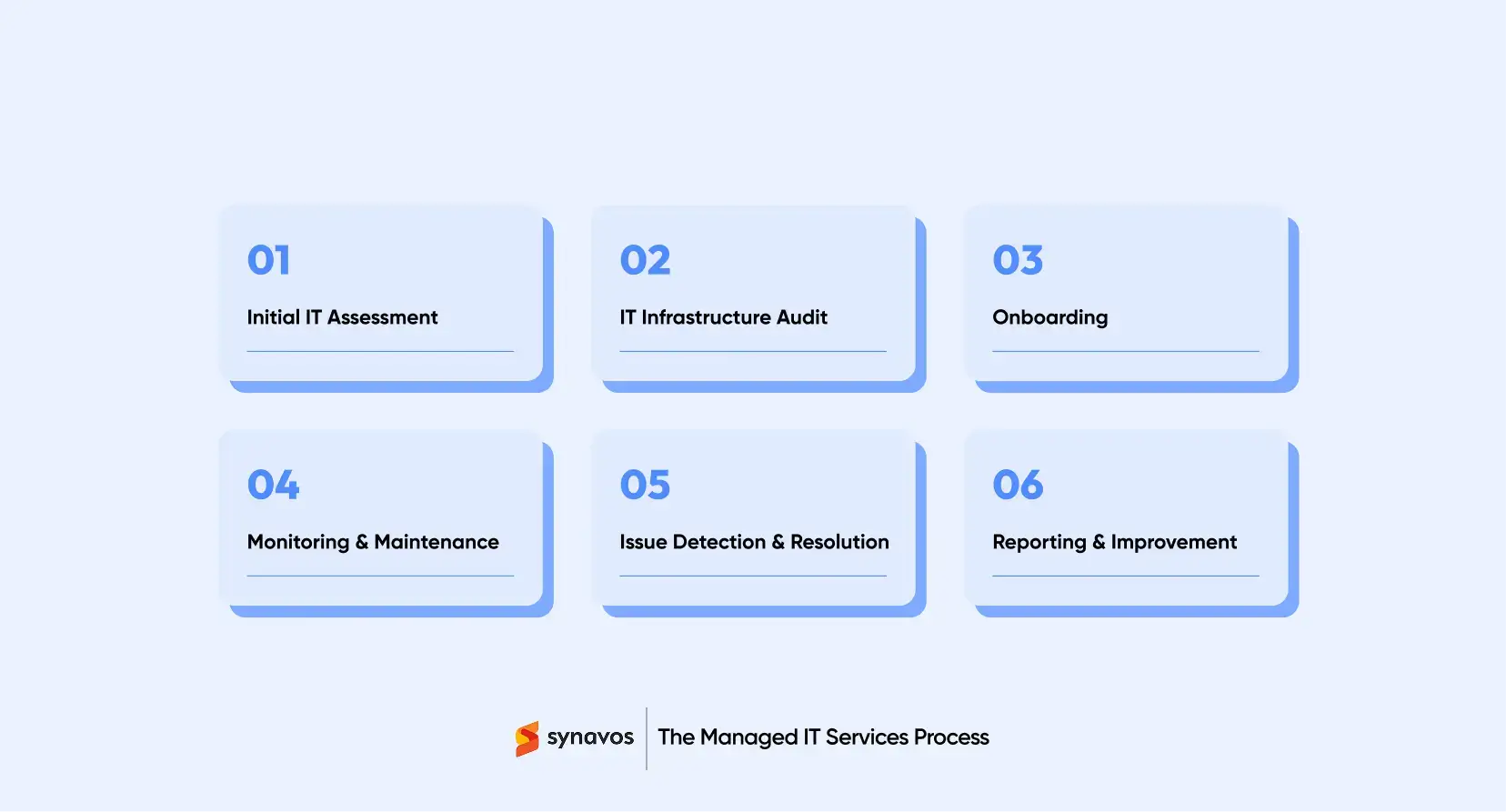
Managed IT services usually follow a simple process: assess the current IT environment, set up the required tools and processes, and then manage the infrastructure on an ongoing basis. The MSP monitors systems, handles support requests, addresses security and performance issues, and provides regular reporting based on agreed service levels.
1. Initial IT Assessment
The process starts with an assessment of your existing IT environment. The MSP reviews your infrastructure, devices, applications, security controls, and business requirements to identify risks and areas that need attention.
2. IT Infrastructure Audit
An infrastructure audit provides a closer look at your network, servers, endpoints, cloud systems, software, and security controls. It helps identify outdated technology, configuration issues, security gaps, and potential points of failure.
3. Onboarding
Once the service scope is agreed, the MSP connects its monitoring and management tools to your IT environment, documents key systems, and establishes support procedures. This creates a clear process for handling issues from the start.
4. Monitoring & Maintenance
After onboarding, the MSP continuously monitors your IT systems and handles routine maintenance. This includes software updates, security patches, performance checks, backups, and other preventive tasks.
5. Issue Detection & Resolution
When a problem is detected, the MSP investigates the cause and takes the appropriate action. Depending on the issue, it may be resolved remotely, handled on-site, or escalated to a relevant technology vendor.
6. Reporting & Improvement
Regular reports give you visibility into system performance, support requests, security events, and other IT metrics. These insights help identify recurring issues and determine where your IT environment needs improvement.
Benefits of Managed IT Services
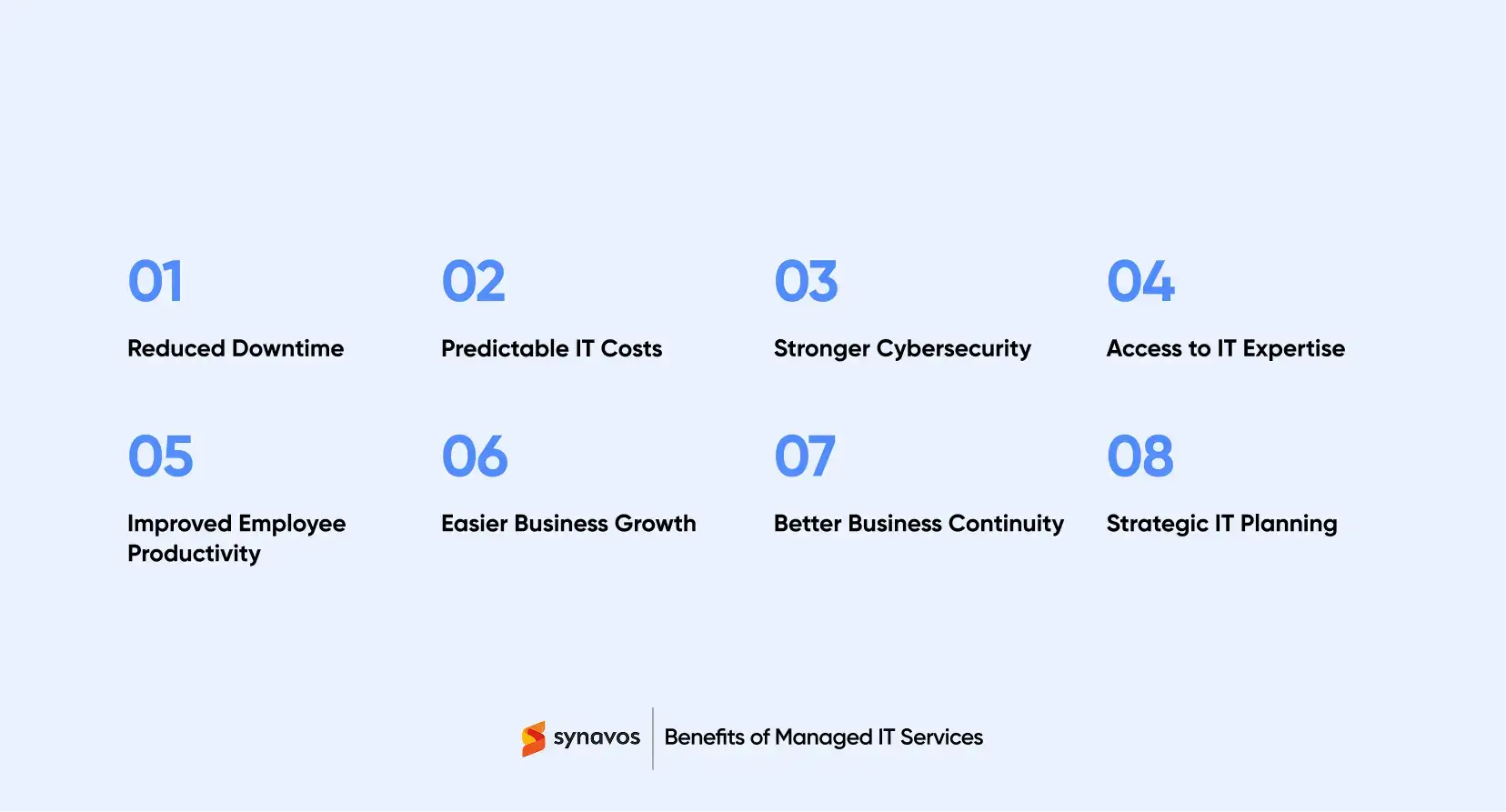
Managed IT services can provide more than technical support. By taking care of day-to-day IT operations, an MSP can help businesses improve reliability, strengthen security, control costs, and give internal teams more time to focus on their core responsibilities.
Reduced Downtime
Proactive monitoring and regular maintenance help identify IT problems before they cause major disruptions. Faster issue resolution also means employees spend less time waiting for systems, applications, or network services to come back online.
Predictable IT Costs
Managing IT in-house can bring unexpected costs, from emergency repairs and hardware replacements to hiring specialists for specific technologies. Managed IT services typically operate under a predictable monthly model, making IT spending easier to plan and manage.
Stronger Cybersecurity
Security threats can come from compromised devices, outdated software, weak passwords, or unauthorized access. Managed IT providers apply security controls, monitor systems, and address vulnerabilities regularly to reduce the risk of attacks and data breaches.
Access to IT Expertise
Businesses don't always have the resources to hire specialists in networking, cloud computing, cybersecurity, and infrastructure. An MSP gives organizations access to a broader team of IT professionals without having to build every capability internally.
Improved Employee Productivity
When employees can quickly get help with technical problems, they spend less time dealing with IT issues. Reliable systems and responsive support also help teams work more efficiently across offices, remote locations, and cloud-based applications.
Easier Business Growth
IT requirements change as a business adds employees, locations, applications, and devices. A managed IT provider can scale infrastructure, support, and security along with those changes, making it easier to expand without constantly rebuilding the IT function.
Better Business Continuity
A major IT failure can affect operations long after the initial problem is resolved. Managed backups, disaster recovery, monitoring, and documented recovery processes help businesses restore critical systems and continue operating when unexpected disruptions occur.
Strategic IT Planning
IT shouldn't only be about fixing today's problems. An MSP can help businesses plan technology upgrades, cloud adoption, cybersecurity improvements, and infrastructure investments based on their future requirements and business priorities.
Managed IT Services vs In-House IT: Which Is Right for Your Business?
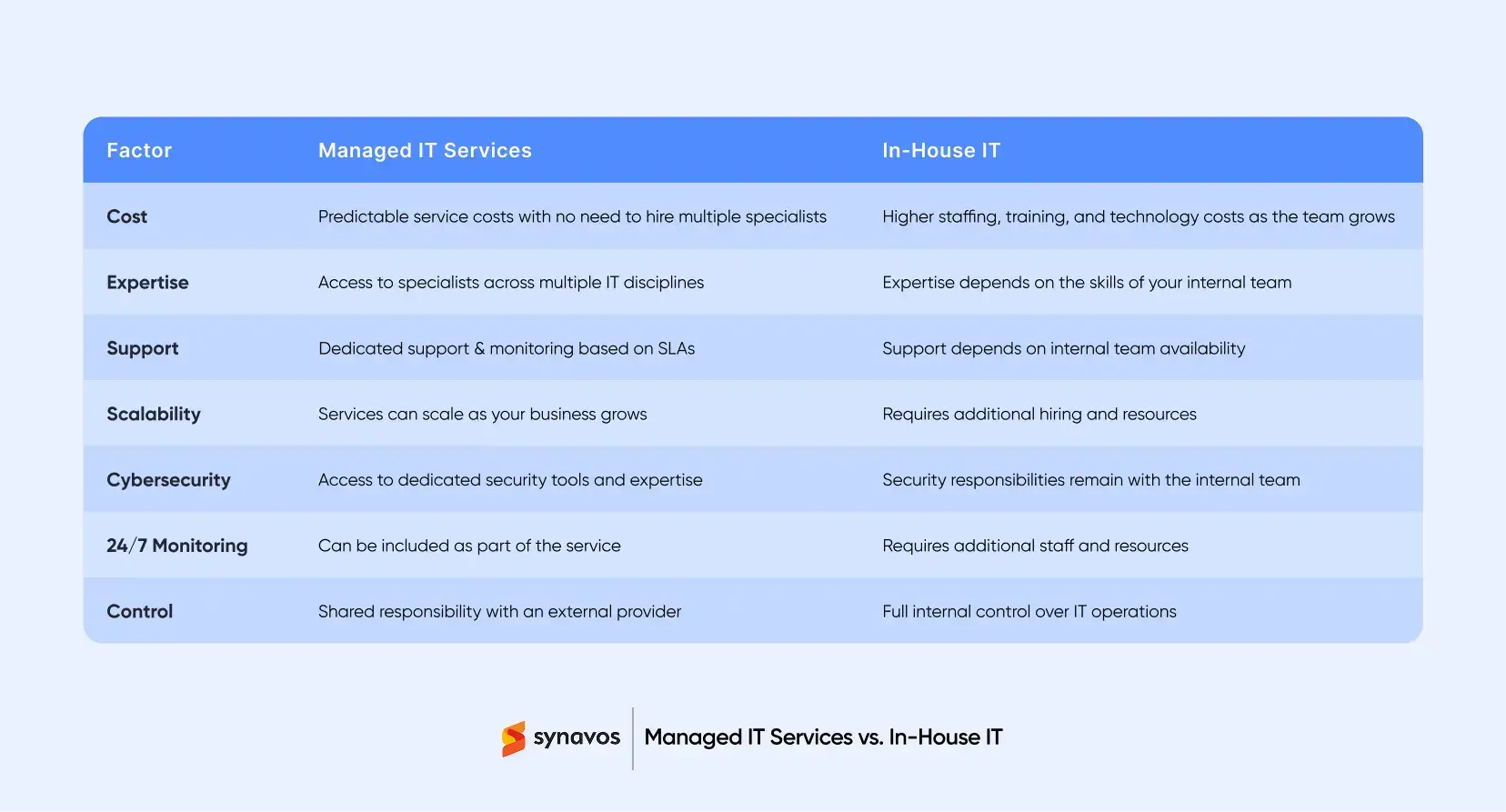
Managing IT internally gives businesses direct control over their technology and day-to-day support. However, maintaining an in-house team with expertise across cybersecurity, cloud, networking, infrastructure, and user support can become expensive as IT requirements grow.
Managed IT services in Saudi Arabia offer another approach. Instead of hiring specialists for every IT function, businesses can work with an MSP that provides access to a broader team and the tools needed to manage their IT environment. The better option depends on your business size, internal expertise, IT requirements, and budget.
When Should You Choose Managed IT Services?
Managed IT services can be a good fit when your business needs broader IT expertise without the cost of building a large internal team. They are also useful for organizations that need 24/7 monitoring, stronger cybersecurity, or support across multiple locations.
When Does In-House IT Make More Sense?
An internal IT team may be better suited to businesses with complex technology environments, specialized internal requirements, or enough resources to maintain a dedicated team. Many larger organizations also combine both approaches through co-managed IT services, using an MSP to complement their existing IT department.
Managed IT Services vs Traditional IT Support
Traditional IT support is usually reactive. A business contacts its IT provider when something goes wrong, such as a server failure, network outage, or software problem. The provider fixes the issue, and support ends once the problem is resolved.
Managed IT services in Saudi Arabia take a more proactive approach. An MSP continuously monitors systems, applies updates and security patches, manages backups, and identifies potential problems before they cause disruption. Instead of paying mainly to fix IT problems, businesses have an ongoing service focused on keeping their IT environment reliable and secure.
| Factor | Managed IT Services | Traditional IT Support |
|---|---|---|
| Approach | Proactive | Reactive |
| Monitoring | Continuous monitoring | Usually performed when an issue occurs |
| Maintenance | Regular and preventive | Often performed when needed |
| Security | Ongoing security management | Typically addressed when requested |
| Downtime | Focuses on preventing disruptions | Responds after disruption occurs |
| Pricing | Usually fixed or predictable | Often charged per hour or per incident |
| IT Planning | Includes ongoing planning and recommendations | Primarily focused on immediate issues |
For businesses that rely heavily on technology, the difference can be significant. Managed IT services focus on preventing problems and maintaining the health of the IT environment, while traditional IT support mainly addresses problems after they occur.
Which Businesses Need Managed IT Services?
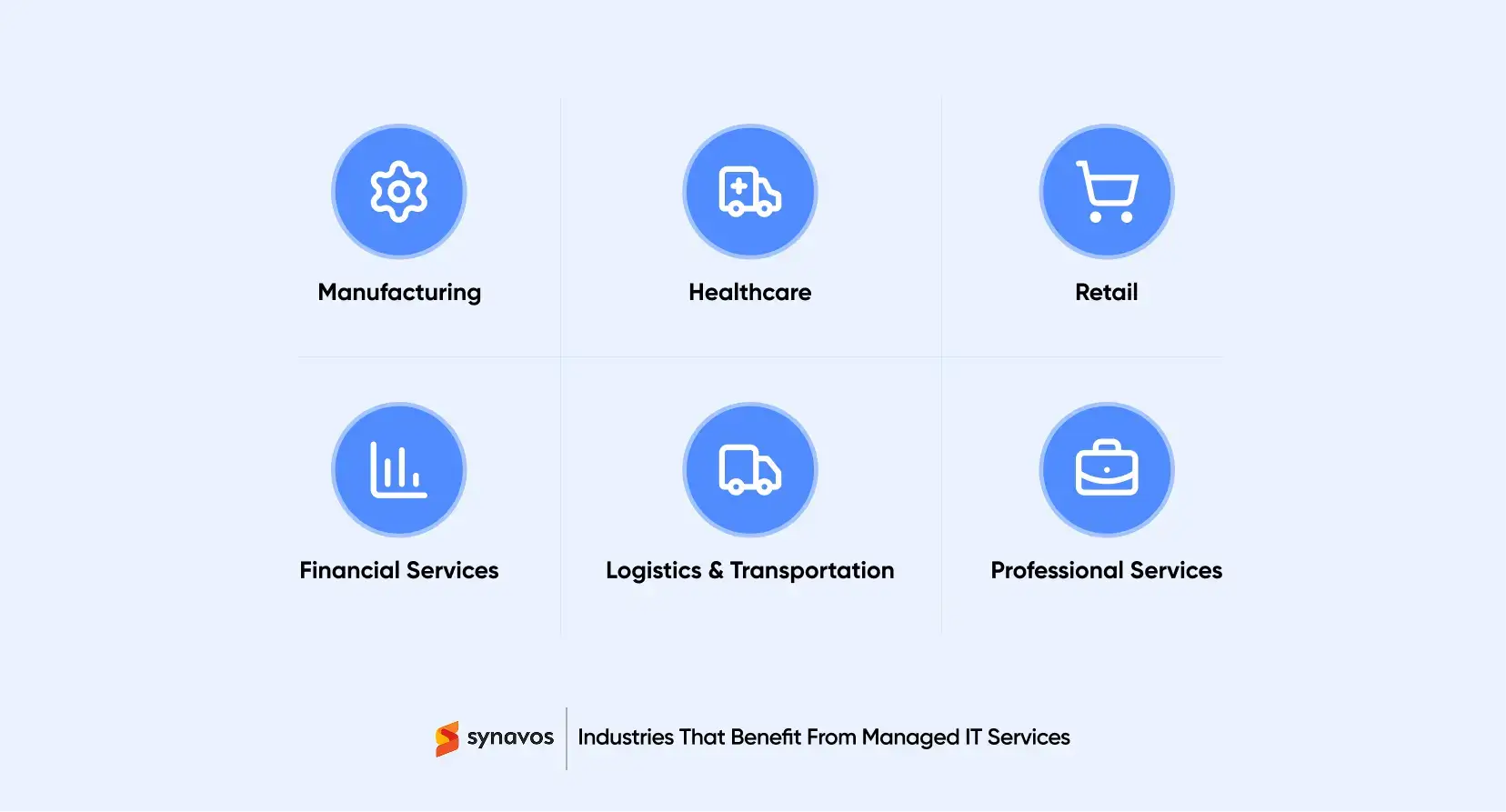
Managed IT services can benefit businesses of different sizes and industries, but they are especially useful when IT plays a critical role in daily operations and the internal team doesn't have the resources to manage everything. In Saudi Arabia, businesses adopting cloud platforms, supporting multiple locations, or handling sensitive data often turn to MSPs for ongoing IT management and security.
Manufacturing
Saudi Arabia's manufacturing sector relies on networks, enterprise applications, connected equipment, and production systems to keep operations running. Managed IT services help manufacturers maintain these systems, reduce downtime, secure operational data, and support multiple facilities.
Healthcare
Hospitals, clinics, and healthcare organizations across Saudi Arabia manage sensitive patient information and depend on reliable IT systems for daily operations. Managed IT services can support infrastructure, cybersecurity, data backup, and secure access while helping organizations meet their technology and compliance requirements.
Retail
Retail businesses in Saudi Arabia often operate multiple branches connected through networks, point-of-sale systems, cloud applications, and digital platforms. Managed IT services help monitor these systems, resolve technical issues, and maintain reliable connectivity across locations.
Financial Services
Banks, fintech companies, and other financial organizations in Saudi Arabia require secure and reliable IT infrastructure to protect financial and customer data. Managed IT services provide ongoing infrastructure monitoring, cybersecurity, backup, and technical support to help reduce operational and security risks.
Logistics & Transportation
Saudi Arabia's logistics and transportation sector depends on technology for fleet management, tracking, warehouse operations, communication, and coordination. Managed IT services help keep these systems available and connected across offices, warehouses, and other operating locations.
Professional Services
Law firms, consulting companies, accounting firms, and other professional businesses across Saudi Arabia rely on cloud applications, communication tools, and secure access to client information. An MSP can manage these systems and provide ongoing support without requiring businesses to build a large internal IT team.
How Much Do Managed IT Services Cost in Saudi Arabia?
The cost of managed IT services in Saudi Arabia depends on the number of users and devices, services required, infrastructure complexity, and level of support. A basic IT support package will cost considerably less than a fully managed setup covering cybersecurity, cloud management, backups, and 24/7 monitoring.
As a general 2026 benchmark, businesses in Saudi Arabia can expect managed IT services to cost around SAR 150 to SAR 600 per user per month, depending on the scope of services. For smaller businesses, fully managed packages can start at around SAR 4,000 per month, while larger or more complex environments can cost SAR 20,000 to SAR 60,000+ per month.
Typical Managed IT Services Pricing in Saudi Arabia
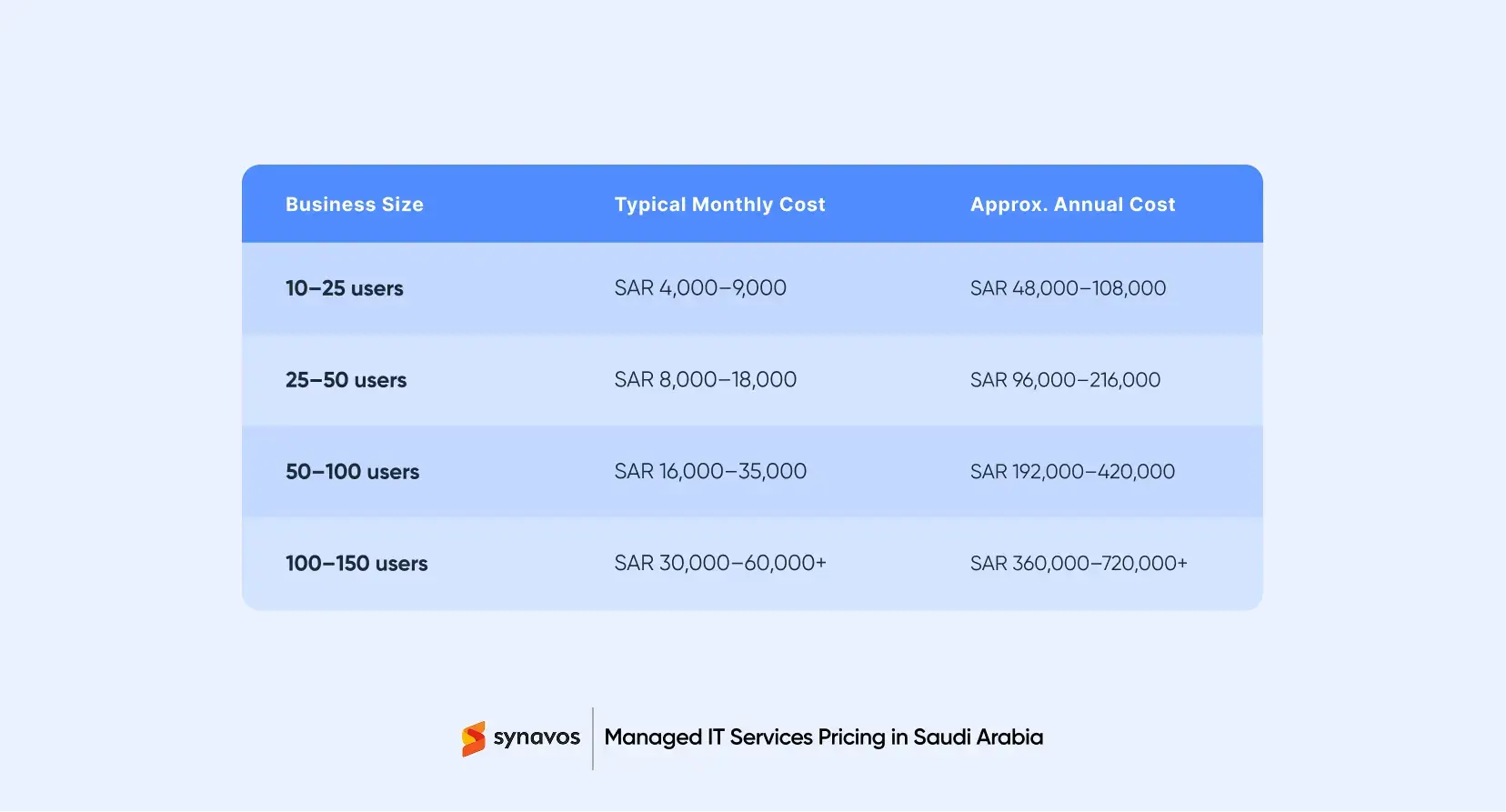
These figures are indicative ranges, not fixed market rates. Your actual cost will depend on the services included and the complexity of your IT environment.
Common Managed IT Pricing Models
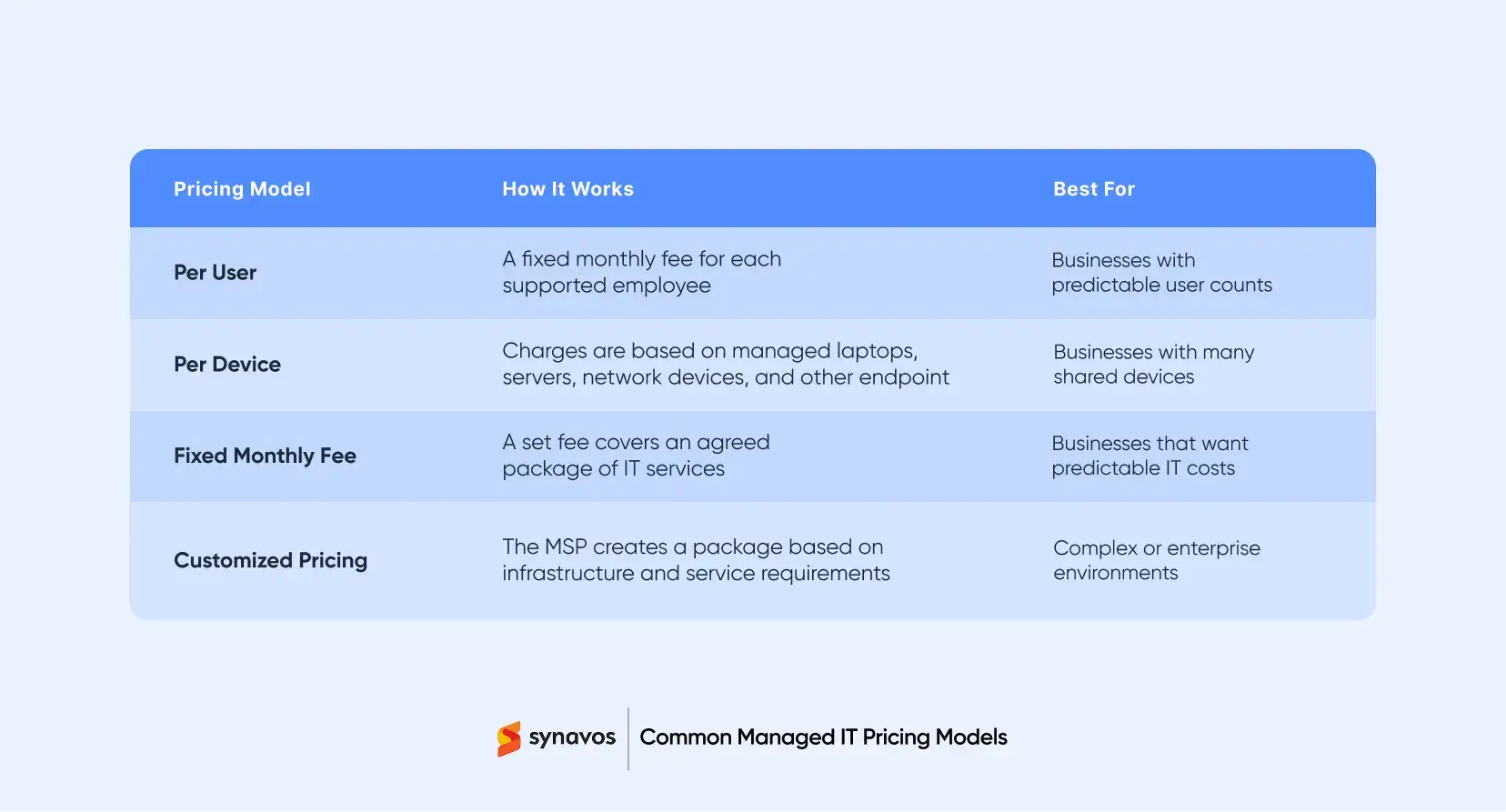
Per-user and per-device pricing can make quotes easier to compare, but the number alone doesn't tell you what you're actually getting. For example, one provider may include cybersecurity, backups, and 24/7 monitoring while another may charge for them separately.
What Affects Managed IT Services Pricing?
Several factors can change the final cost, including the number of users and devices, number of locations, existing infrastructure, cloud environment, cybersecurity requirements, support hours, on-site coverage, and SLA requirements. Regulated industries may also require additional security and compliance services.
When comparing managed IT services in Saudi Arabia, look beyond the monthly fee. Check exactly what's included, whether security tools and backups are covered, how after-hours support works, what response times the SLA guarantees, and which services are billed separately. A cheaper quote isn't necessarily better if essential services are excluded.
How to Choose the Right Managed IT Service Provider in Saudi Arabia
Choosing an MSP is about more than finding the lowest monthly price. The right provider should have the technical expertise, security capabilities, response times, and service coverage your business actually needs. Before signing an agreement, evaluate the following factors.
IT Expertise and Experience
Look for a provider with experience managing IT environments similar to yours. Check its expertise across networking, cloud platforms, cybersecurity, infrastructure, and the technologies your business already relies on.
Service Level Agreements (SLAs)
Your SLA should clearly define what the provider will deliver and how quickly it will respond. Pay attention to response and resolution times, support hours, uptime commitments, escalation procedures, and what happens when service levels aren't met.
Cybersecurity Capabilities
Security should be part of your managed IT service, not an afterthought. Ask how the provider handles endpoint security, vulnerability management, patching, threat monitoring, backups, and incident response.
Local Support in Saudi Arabia
For businesses operating in the Kingdom, local support can make a significant difference when an issue requires an on-site visit. Check whether the provider has engineers or support resources available in the locations where your business operates.
Scalability
Your IT requirements will change as you add employees, locations, applications, and cloud services. Choose an MSP that can expand its services without forcing you to change providers as your business grows.
Reporting and Transparency
A good MSP should give you clear visibility into your IT environment. Regular reports should cover issues, system performance, security events, service requests, and other metrics that help you understand how your IT is performing.
References and Track Record
Ask for relevant client references, case studies, or examples of similar projects. This can give you a better idea of how the provider handles real-world IT challenges and whether it can deliver the level of service you expect.
Managed IT Services and Compliance in Saudi Arabia
Businesses in Saudi Arabia may need to meet different cybersecurity and data protection requirements depending on their industry and the type of data they handle. The National Cybersecurity Authority (NCA) has established cybersecurity controls for relevant organizations, while the Personal Data Protection Law (PDPL) governs the processing of personal data in the Kingdom. Financial institutions regulated by Saudi Central Bank (SAMA) must also follow applicable cybersecurity requirements, including SAMA's Cyber Security Framework.
When choosing managed IT services in Saudi Arabia, ask the provider how it supports your security and compliance requirements. For organizations subject to specific NCA or SAMA requirements, the MSP should also be able to work within the relevant controls and provide the documentation and reporting needed to support compliance.
Why Choose Synavos for Managed IT Services in Saudi Arabia?
Based in Riyadh, Saudi Arabia, Synavos provides managed IT services to businesses across the Kingdom. With 10+ years of experience and 100+ IT professionals, we provide ongoing support for networks, servers, cloud infrastructure, cybersecurity, IT monitoring, and data backup and recovery.
ISO-Certified Quality & Security
ISO 9001 and ISO 27001 certifications reflect Synavos's focus on service quality and information security.
NCA & SAMA Cybersecurity
Our managed IT services follow relevant National Cybersecurity Authority (NCA) cybersecurity controls and support applicable SAMA cybersecurity requirements.
IT Services That Fit Your Business
We tailor managed IT services to your existing infrastructure, technology requirements, and growth plans.
Experience in the Saudi Market
We understand the technology needs of businesses in Saudi Arabia while applying internationally recognized IT practices.
Fast & Reliable IT Support
Our experienced IT specialists respond quickly to technical issues to help resolve problems faster and reduce downtime for your business.
Fixed Monthly Pricing Model
Our fixed monthly pricing makes IT spending easier to plan and avoids unexpected support charges.
Looking for managed IT services in Saudi Arabia? Talk to Synavos about your IT requirements and find the right support for your business.
Conclusion
For businesses in Saudi Arabia, managed IT services provide a practical way to keep IT infrastructure secure, maintained, and supported without building a large internal team. As Vision 2030 continues to drive digital transformation across the Kingdom, partnering with a reliable managed IT service provider can help businesses reduce downtime, manage technology more effectively, and keep day-to-day operations running smoothly.