Cybersecurity has become a critical concern for businesses of all sizes. As organizations continue to digitize operations, build custom platforms, and rely more heavily on cloud infrastructure, the number of potential attack points keeps growing.
What makes cybersecurity especially challenging is that weaknesses often remain hidden for a long time. Everything may appear to be working fine until a data breach, ransomware attack, or system compromise suddenly exposes the gaps.
In many cases, these issues are not caused by a single mistake. They are the result of small vulnerabilities that accumulate over time. An outdated system here, a weak password policy there, or a lack of visibility into network activity can quietly create opportunities for attackers.
The good news is that these weaknesses usually leave warning signs. If businesses know what to look for, they can identify problems early and fix them before serious damage occurs.
Here are six common signs that your business cybersecurity may need attention and what you can do to improve it:
1. Outdated Software and Unpatched Systems
Why This Is a Problem
Outdated software remains one of the most common entry points for cyberattacks. When operating systems, applications, or plugins are not updated regularly, they often contain vulnerabilities that attackers already know how to exploit.
Cybercriminals frequently scan the internet for systems running older versions of software. Once they find a weakness, they can use automated tools to gain access or install malicious programs.
Legacy systems make things even more difficult. Older technologies may no longer receive security updates, which leaves them permanently exposed to known threats.
How to Fix It
The first step is establishing a reliable patch management process. Businesses should maintain an inventory of all their systems and applications so updates can be applied quickly when new security patches are released.
Regular vulnerability scans also help identify outdated components before attackers do.
In many cases, though, vulnerabilities go beyond simple software updates. Weaknesses may exist in the way systems interact with each other, especially in businesses that rely on custom platforms or complex integrations. Security teams often begin by reviewing the overall architecture of these systems and identifying areas where stronger protections can be built in. Development focused cybersecurity teams, such as those at Synavos, typically approach security this way by first identifying technical vulnerabilities and then strengthening the underlying systems through improved architecture and secure development practices.
2. Weak Access Control and Password Policies
Why This Is a Problem
Access management is another area where many organizations unintentionally create security risks.
Employees may use weak passwords, reuse the same credentials across multiple platforms, or have access to systems that are not relevant to their role. These small gaps can make it much easier for attackers to gain entry.
Once a single account is compromised, attackers often attempt to move deeper into the network to reach sensitive systems or data.
How to Fix It
Strong authentication practices can significantly reduce these risks.
Businesses should enforce complex password requirements and enable multi factor authentication wherever possible. Even if a password is compromised, the additional verification step makes it much harder for attackers to access the system.
It is also important to limit access based on roles. Employees should only have permissions that are necessary for their work.
In organizations that rely on internal tools or custom applications, access control often needs to be designed directly into the system architecture. Secure authentication flows and identity management frameworks can make access both safer and easier to manage.
3. Lack of Employee Cybersecurity Awareness
Why This Is a Problem
Technology alone cannot prevent every cyberattack. People play a major role in cybersecurity, and attackers know it.
Phishing emails, fake login pages, and social engineering techniques are designed specifically to trick employees into revealing credentials or installing malicious software. These attacks are becoming increasingly convincing.
Even something as simple as clicking a suspicious link can expose company systems to risk.
How to Fix It
Cybersecurity awareness should be part of everyday business culture.
Regular training sessions can help employees recognize phishing attempts, understand safe password practices, and know what steps to take if they notice something unusual.
Short workshops, internal security guidelines, and simulated phishing exercises can go a long way in helping teams develop better awareness. When employees understand the risks and know how to respond, they become a valuable part of the organization’s security strategy.
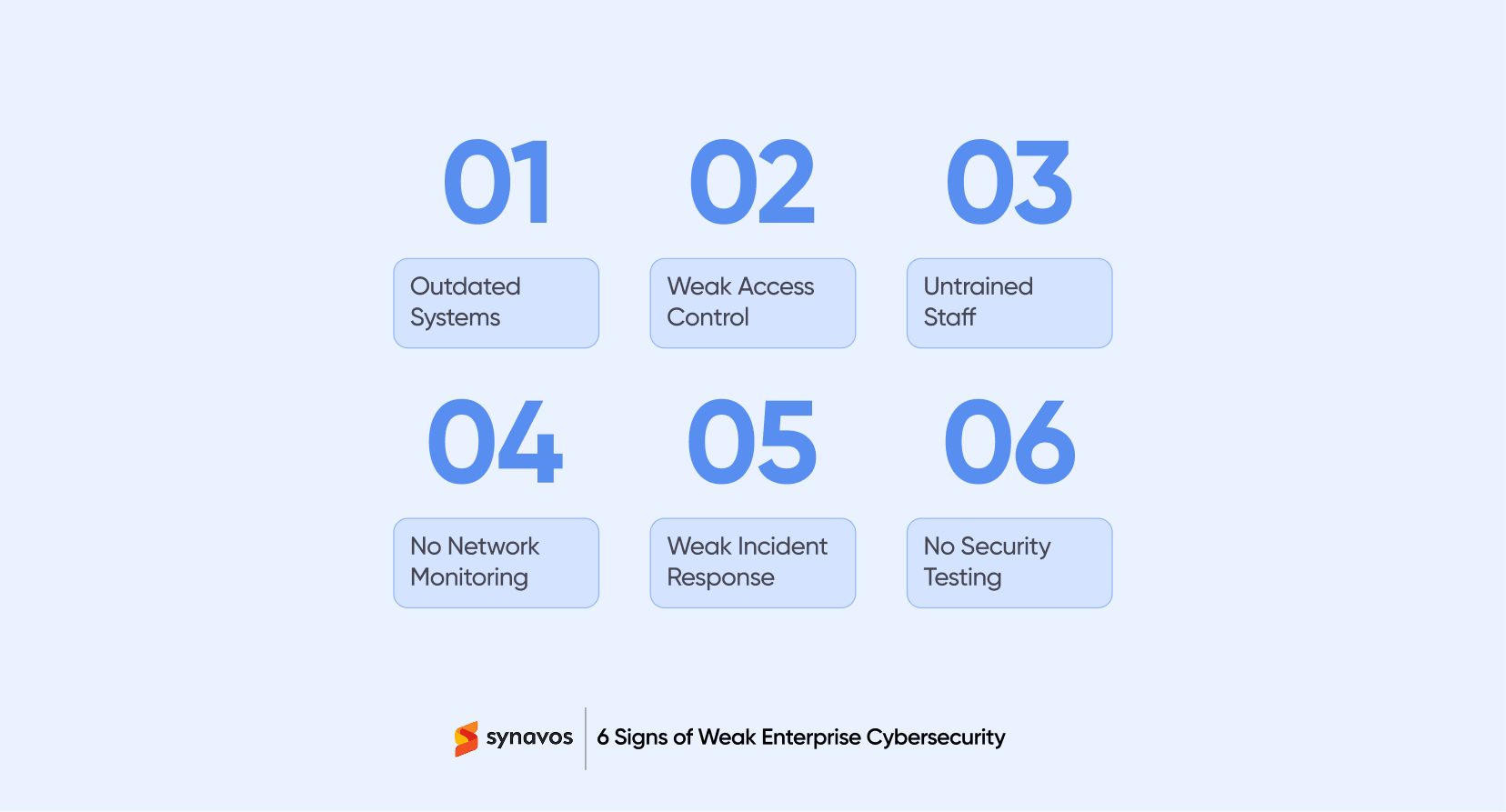
4. No Continuous Network Monitoring
Why This Is a Problem
One of the biggest challenges in cybersecurity is detecting threats early.
Without proper monitoring tools, attackers can stay inside systems for weeks or even months without being noticed. During this time, they may collect sensitive information, move between systems, or install additional malicious software.
Businesses that rely only on basic security tools often lack the visibility needed to detect this type of activity.
How to Fix It
Continuous monitoring helps organizations gain better insight into what is happening across their systems.
Security monitoring platforms can analyze activity across networks and detect unusual behavior such as suspicious login attempts or abnormal data transfers. Endpoint monitoring tools also track activity on individual devices and alert security teams if something looks wrong.
For companies operating complex platforms or digital services, monitoring features are sometimes built directly into the system during development. Logging mechanisms, alert systems, and security dashboards can make it easier to detect and respond to threats early.
5. Poor Incident Response Planning
Why This Is a Problem
Even organizations with strong security controls can experience cyber incidents. What makes the biggest difference is how quickly they respond.
Without a clear incident response plan, teams may struggle to decide what steps to take. Valuable time can be lost trying to identify the source of the problem or determine who is responsible for handling it.
This delay can allow the attack to spread further and cause greater damage.
How to Fix It
Every organization should have a clear incident response plan that outlines how potential security incidents will be handled.
The plan should include detection procedures, reporting channels, response responsibilities, and recovery steps. Teams should also run occasional simulations so everyone understands what to do during an actual incident.
From a technical perspective, systems can also be designed to support faster recovery. Features such as automated backups, resilient infrastructure, and secure failover mechanisms can significantly reduce downtime if an incident occurs.
6. No Regular Security Assessments or Penetration Testing
Why This Is a Problem
Cyber threats evolve constantly, and systems change as businesses grow. New integrations, applications, or infrastructure updates can introduce vulnerabilities that did not exist before.
Organizations that rarely test their systems often have blind spots they are not aware of. Attackers, however, are actively searching for those weaknesses.
Without regular assessments, businesses may not realize their systems are vulnerable until an attack actually happens.
How to Fix It
Regular security assessments help organizations understand where their weaknesses are and how they can improve.
Penetration testing simulates real world attacks to reveal vulnerabilities in applications, networks, and infrastructure. These tests provide valuable insights that allow businesses to strengthen their systems before attackers find those gaps.
For companies that rely heavily on custom technology, the process often goes beyond identifying vulnerabilities. It may involve improving system architecture, strengthening APIs, or redesigning parts of the platform to make them more secure. Development teams that specialize in cybersecurity, including those working on large scale systems at companies like Synavos, often take this approach by combining vulnerability analysis with secure system design and implementation.
Wrapping UP
Cybersecurity weaknesses often develop quietly. Outdated software, weak access controls, and hidden vulnerabilities can gradually create opportunities for attackers.
By recognizing these warning signs early, businesses can address security gaps before they lead to serious incidents. Regular assessments, stronger authentication, employee awareness, and secure system design all contribute to a more resilient cybersecurity posture.
If you want expert guidance in identifying vulnerabilities and strengthening your systems with secure, customized solutions, you can always reach out to Synavos for a conversation about how your cybersecurity can be improved.