Making the right business decisions has never been more challenging. Markets change quickly, customer expectations evolve, and competition continues to grow. Relying only on intuition or past performance is no longer enough to stay ahead in 2026.
Predictive analytics helps businesses make smarter, faster, and more confident decisions by using data to anticipate what is likely to happen next. Instead of reacting to outcomes after they occur, companies can use predictive insights to plan ahead, reduce risk, and uncover new opportunities. If you're new to the concept, here’s a simple breakdown of what predictive analytics is and how businesses use it in real-world scenarios.
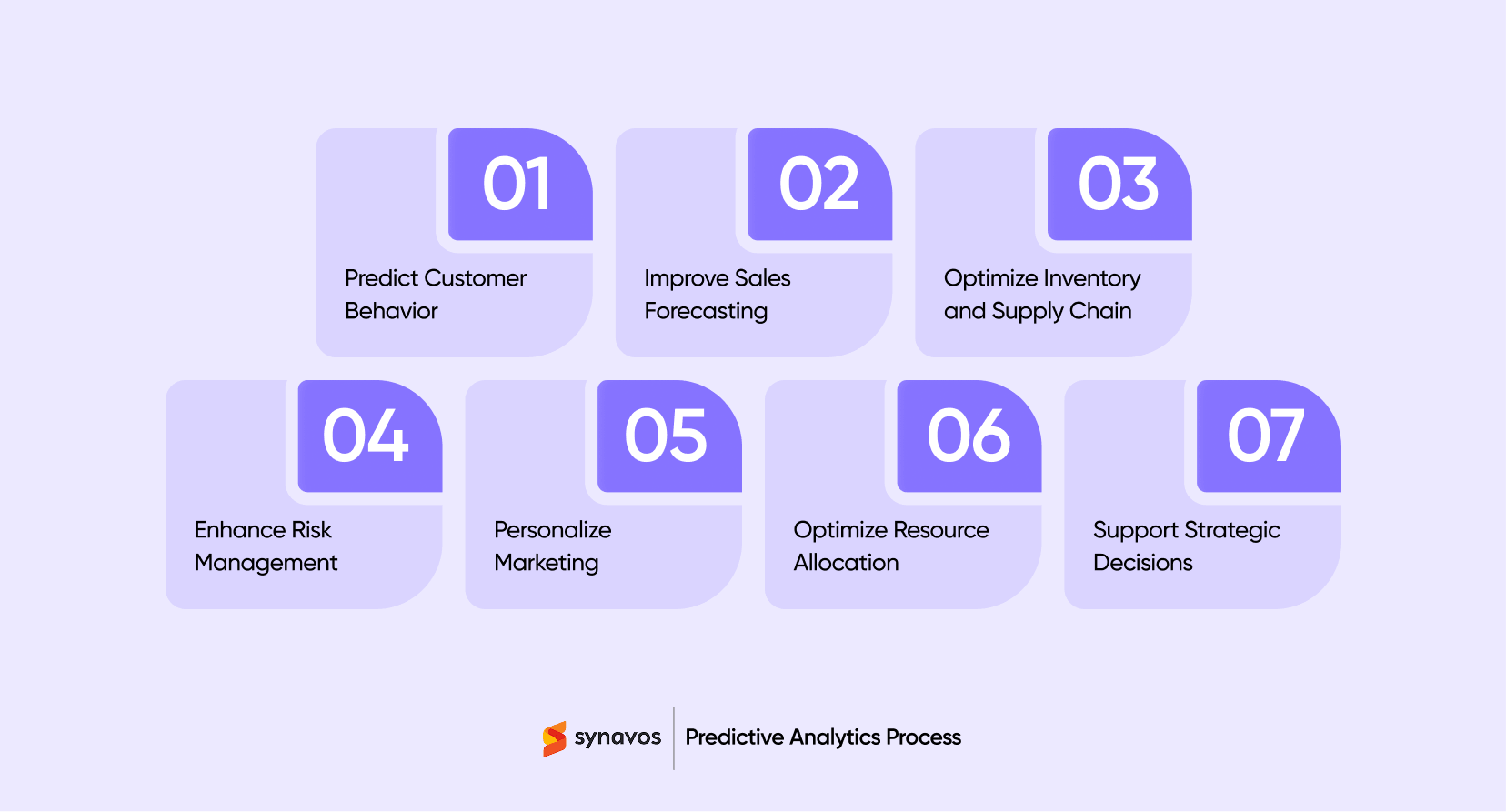
Below are seven powerful ways predictive analytics improves decision-making across business functions:
1. Predicting Customer Behavior
Knowing what your customers are likely to do next is one of the biggest advantages of predictive analytics. By analyzing past purchases, website interactions, engagement patterns, and even social media activity, businesses can identify customers who may leave, buy more, or respond to certain campaigns.
For example, a subscription-based service can predict which users are at risk of canceling. Instead of waiting until they leave, the company can send personalized offers or reminders to retain them. This proactive approach not only reduces churn but also strengthens loyalty and builds long-term relationships.
Predictive insights also help in identifying high-value customers, allowing businesses to focus their efforts on those most likely to generate significant revenue.
2. Improving Sales Forecasting
Sales forecasting is often a guessing game without data. Predictive analytics brings accuracy and clarity by combining historical sales, market trends, seasonal patterns, and customer behavior.
For instance, a retail chain can predict which products will be in high demand during a holiday season and adjust inventory and marketing campaigns accordingly. This ensures they do not overstock slow-moving items or run out of popular products, maximizing both revenue and customer satisfaction.
Accurate sales forecasts also help businesses set realistic targets, plan budgets, and allocate resources more efficiently, giving sales teams a clear roadmap to meet company goals.
3. Optimizing Inventory and Supply Chain
Inventory management and supply chain planning are often full of guesswork. Overstocking ties up capital and increases storage costs while stockouts lead to lost sales and unhappy customers. Predictive analytics helps businesses anticipate demand fluctuations, optimize inventory levels, and prepare for potential disruptions.
For example, an e-commerce company can predict spikes in demand for a trending product and adjust procurement and shipping schedules in advance. This reduces waste, lowers storage costs, and ensures customers always find what they need.
It also helps identify bottlenecks in the supply chain before they escalate, enabling proactive planning and smoother operations.
4. Enhancing Risk Management
Every business faces risks, including financial, operational, and fraudulent activities. Traditional risk management often reacts after a problem occurs. Predictive analytics changes this by detecting anomalies, patterns, and warning signals before they become costly.
For example, a bank can monitor transactions in real time and flag unusual activity that may indicate fraud. Businesses can intervene early, preventing financial losses and protecting their reputation.
Predictive insights also help anticipate operational challenges, such as machinery breakdowns or supplier delays, allowing companies to take corrective measures before they affect performance.
5. Personalizing Marketing Campaigns
Generic marketing messages rarely resonate with customers. Predictive analytics allows businesses to segment audiences based on behavior, demographics, and past interactions, predicting what each customer is likely to respond to.
An online retailer can use these insights to send personalized product recommendations or promotions to customers who have shown interest in similar items. This leads to higher engagement, better conversion rates, and more efficient use of marketing budgets.
Over time, predictive analytics helps refine campaigns, learning which strategies work best for different segments so marketing efforts become smarter and more targeted.
6. Optimizing Resource Allocation
Resources, including staff, budget, or equipment, are limited. Predictive analytics ensures they are allocated where they can have the most impact.
For example, a call center can forecast peak call times and schedule employees accordingly, reducing wait times and improving customer satisfaction. Similarly, marketing budgets can be allocated to campaigns predicted to deliver the highest return on investment.
By making data-driven resource decisions, businesses reduce waste, improve efficiency, and ensure every investment contributes to achieving their goals.
7. Supporting Strategic Decision-Making
Predictive analytics is also a powerful tool for long-term strategy. By forecasting trends, identifying emerging opportunities, and estimating potential risks, it helps business leaders make informed strategic decisions.
For instance, a company planning to enter a new market can use predictive insights to estimate demand, competition, and growth potential. This reduces uncertainty and allows executives to act with confidence rather than relying on guesswork.
When businesses combine predictive analytics with their strategic planning, decisions become faster, smarter, and more likely to deliver success.
Conclusion
Predictive analytics transforms the way businesses make decisions. By forecasting customer behavior, optimizing sales and inventory, mitigating risks, personalizing marketing, allocating resources effectively, and supporting strategic planning, it provides a competitive advantage in today’s data-driven world.
At Synavos, we build AI-based predictive analytics solutions that help businesses make smarter and data-driven decisions. Contact us today to start turning your data into meaningful insights and better business outcomes.