Odoo is one of the most popular ERP (Enterprise Resource Planning) systems that helps businesses manage everything from sales and inventory to HR and finance. However, many businesses go through a process called Odoo re-implementation. This is when companies decide to start over with their Odoo ERP system, usually after facing challenges with the first implementation.
But how long does Odoo re-implementation take? Well, it depends on various factors.
In this blog, we'll walk you through the practical timeline for Odoo re-implementation and share tips for ensuring the process goes smoothly.
Why Odoo Re-Implementation May Be Necessary
Sometimes businesses experience problems with their initial Odoo implementation. These problems can arise from inefficient workflows, scaling issues, or an ERP system that doesn’t match the company’s evolving needs. For example, a company may need additional customizations or new features, which were not part of the original Odoo system.
Businesses may also face challenges with integrating Odoo with new tools or systems. Additionally, poor user adoption can often lead to the need for re-implementation, as employees struggle to use the system effectively. The good news is that with Odoo re-implementation, businesses can address these issues and improve their system's performance, ensuring it scales well with their growth.
Discover the full scope of Odoo re-implementation, including important factors and industry best practices, in our blog, The Ultimate Guide to Odoo Re-Implementation for Businesses.
Factors That Influence Odoo Re-Implementation Time
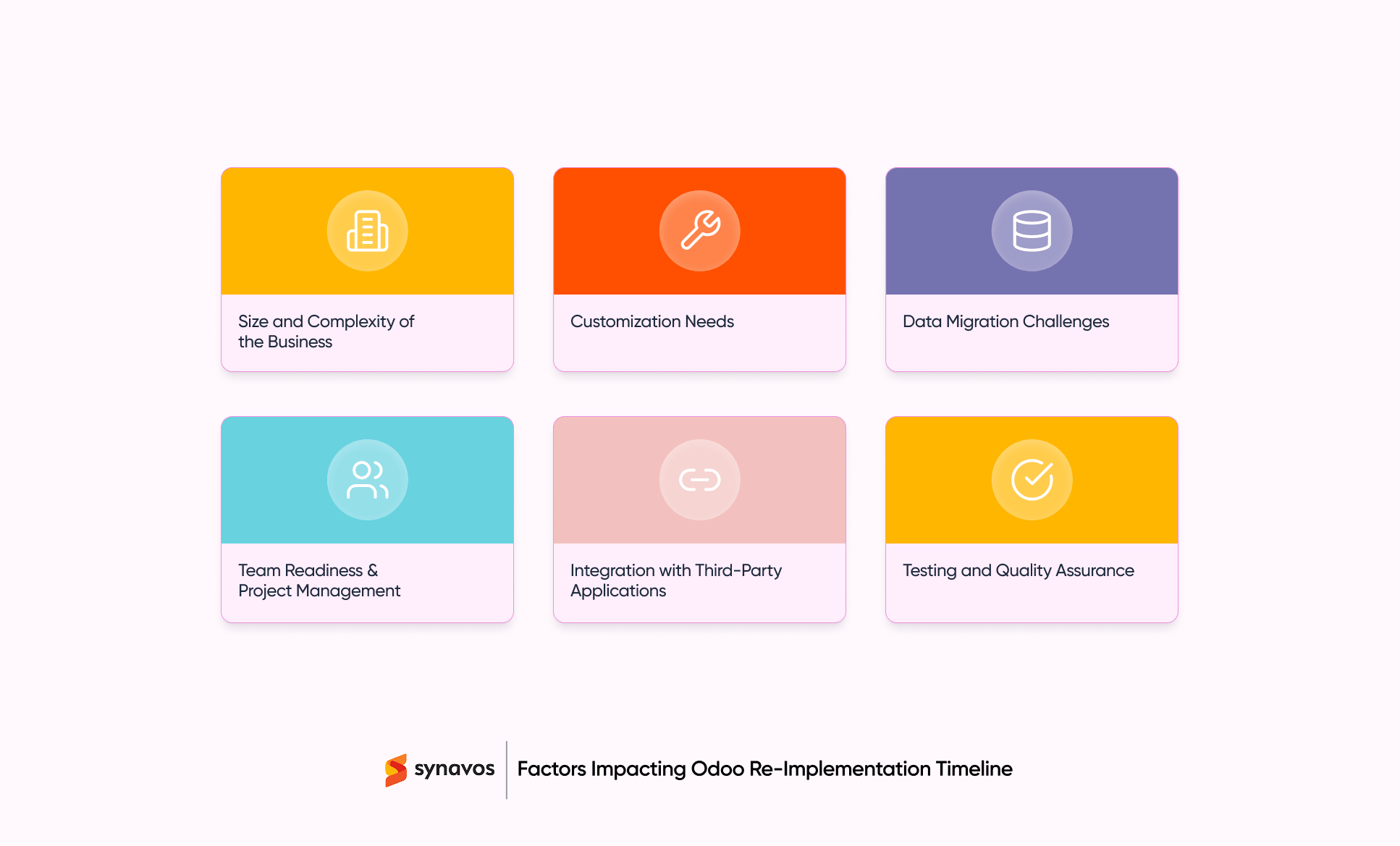
Odoo re-implementation is not a one-size-fits-all process. The timeline can vary based on several factors, including:
- Size and Complexity of the Business: Larger businesses or those with complex processes may take longer to re-implement.
- Customization Needs: The more customized the system needs to be, the longer it will take. Custom features or modules can take time to develop.
- Data Migration Challenges: Migrating data from the old system into Odoo can be tricky and may require significant time, especially if there is a lot of data to move.
- Team Readiness & Project Management: Having a well-prepared team and effective project management can speed up the process.
- Integration with Third-Party Applications: If Odoo needs to connect with other systems, this will also add to the timeline.
- Testing and Quality Assurance: Thorough testing is crucial to make sure everything works perfectly, and this step can take time.
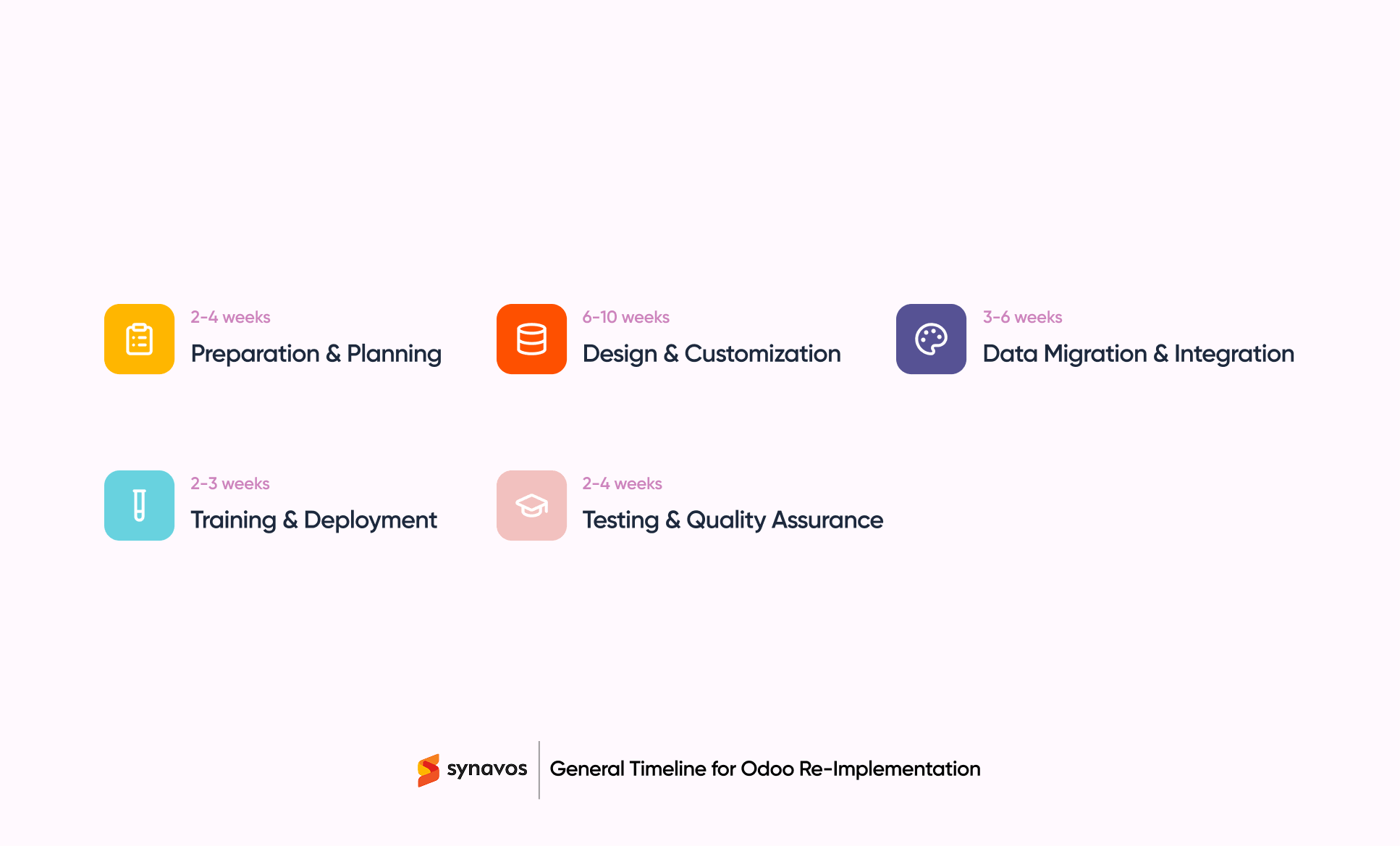
Typical Timeline for Odoo Re-Implementation
Below is an example of a typical timeline for an Odoo re-implementation project based on the level of complexity involved. This assumes that the company has already used Odoo before and is familiar with the basics.
1. Simple Re-Implementation (2–3 months)
For businesses that require minimal changes, such as upgrading from one version of Odoo to the next or making small tweaks to the existing system, the re-implementation could be completed in around 2 to 3 months.
Key Activities:
- Upgrade to a new version of Odoo
- Minor changes to workflows or processes
- Minimal customization
- Basic data migration
- Testing and quality assurance
2. Medium Complexity Re-Implementation (3–6 months)
For businesses that need moderate changes, such as integrating a few additional modules or introducing new customizations to meet business needs, the re-implementation timeline will typically span 3 to 6 months.
Key Activities:
- Upgrade to the latest version of Odoo
- Moderate workflow changes and customizations
- Integration of a few third-party applications
- Enhanced data migration (includes cleaning and formatting)
- Testing and quality assurance
- User training and support
3. High Complexity Re-Implementation (6–12 months)
For larger businesses with complex processes, significant customizations, and integrations, the re-implementation process could take 6 to 12 months or more. This type of re-implementation is typically necessary when companies are undergoing major business transformations.
Key Activities:
- Comprehensive upgrade of Odoo
- Major reconfiguration of processes and workflows
- Heavy customization and new module development
- Complex integrations with external software systems
- Full-scale data migration, including historical data cleaning and validation
- Extensive testing and quality assurance
- Thorough user training and support, with a focus on change management
Challenges That Can Affect the Timeline
While the above timeline gives a general overview, there are several challenges that can extend the process:
- Scope Creep: If the project’s scope keeps expanding, it will delay the timeline. It’s essential to stick to the plan and avoid adding too many additional features.
- Underestimating Complexity: Sometimes, businesses may not fully understand the complexity of the system, which can lead to delays. Proper planning and expert consultation can prevent this.
- Poor Project Management: A lack of clear leadership and communication can slow down the process. Having a dedicated project manager is key.
How to Speed Up the Odoo Re-Implementation Process
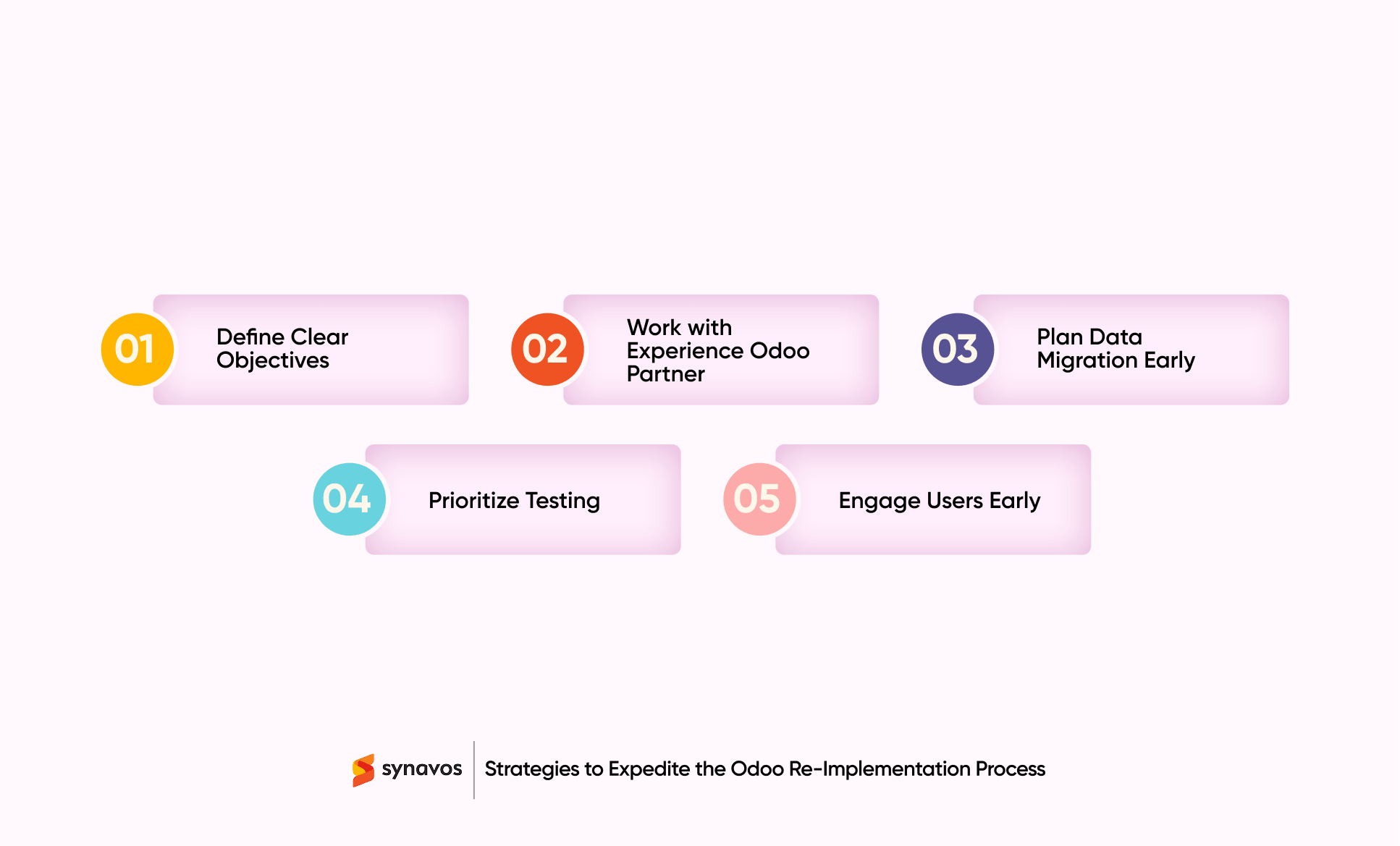
While the timeline for Odoo re-implementation can vary, there are several strategies that businesses can adopt to ensure a smoother and faster process:
1. Define Clear Objectives
Before starting the re-implementation, clearly define the goals and objectives of the project. Having a clear vision of what you want to achieve will help streamline the decision-making process and reduce delays.
2. Work with an Experienced Odoo Partner
Collaborating with a credible Odoo implementation partner like Synavos can significantly reduce the re-implementation timeline. These partners are familiar with the system and can efficiently manage the complexities of customization, integration, and data migration.
3. Plan Data Migration Early
Start preparing your data migration strategy early in the process. This will help you identify any issues with your existing data and allow for sufficient time to clean and structure it for migration.
4. Prioritize Testing
Allocate sufficient time for testing to identify issues early. Thorough testing minimizes the risk of delays during the later stages of the project. Conduct tests at various stages of the re-implementation process to ensure quality.
5. Engage Users Early
Engaging end users early in the process helps to ensure that the re-implemented system aligns with their needs. Training them as early as possible helps to minimize disruption during the go-live phase.
Conclusion
The duration of an Odoo re-implementation project depends on various factors as discussed above. On average, businesses can expect the process to take anywhere from 2 to 12 months, with smaller, less complex implementations taking less time and larger, more customized implementations requiring more.
However, working with a trusted and best Odoo implementation partner that prioritizes clear communication and testing, and ensures a smooth and timely Odoo re-implementation can lead to improved efficiency and productivity. And that’s where Synavos comes in. Having a proven track record of hundreds of successful ERP implementations, Synavos excels in Odoo ERP, SAP Business One, and Microsoft Business Central across KSA, Pakistan, and the UAE.
Struggling with your current Odoo system? Let’s talk.