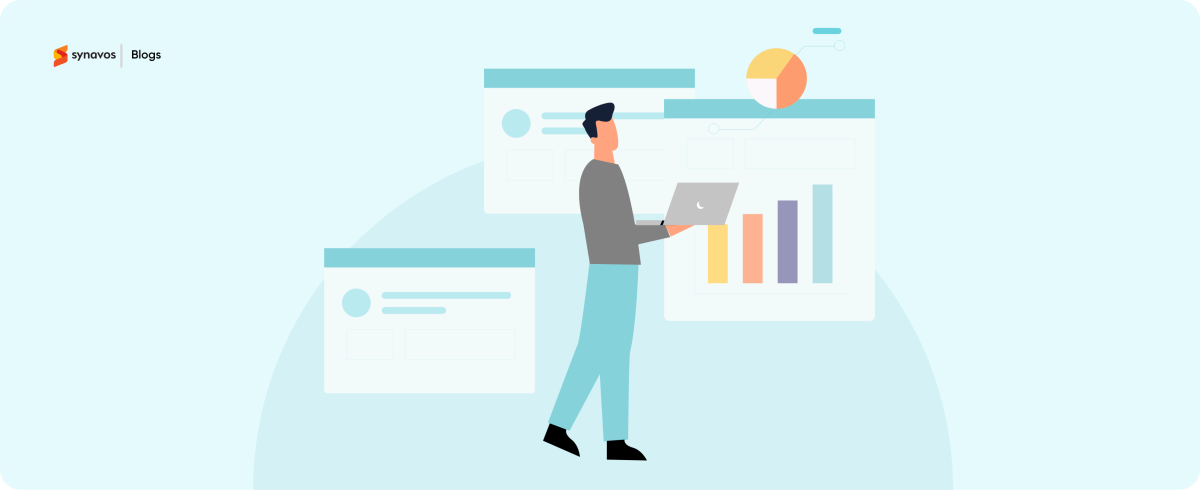
Businesses generate more data than ever, yet many decisions are still made based on past reports, assumptions, or gut feeling. Predictive analytics changes that by helping organizations anticipate what is likely to happen next, not just understand what already happened.
By analyzing historical data and identifying patterns, predictive analytics enables businesses to forecast trends, reduce risk, and make smarter decisions ahead of time. It is no longer limited to large enterprises. Companies of all sizes now use predictive analytics to improve operations, understand customers better, and stay competitive.
In this guide, we will explain what predictive analytics is, how it works, and how businesses use it in real world scenarios. You will also learn about common use cases, implementation challenges, costs, and how to get started with predictive analytics in a practical and informed way.
What Is Predictive Analytics?
Predictive analytics is the practice of using historical data to predict future outcomes. Instead of only analyzing what happened in the past, it focuses on identifying patterns and trends that indicate what is likely to happen next.

At its core, predictive analytics combines data, statistical techniques, and machine learning models to generate forecasts. These forecasts help businesses answer questions such as which customers are likely to churn, how demand may change in the coming months, or where potential risks might appear.
Unlike traditional reporting, which looks backward, predictive analytics is forward looking. It takes existing data and applies models that learn from past behavior. As more data becomes available, these models can improve their accuracy over time, making predictions more reliable.
For businesses, predictive analytics serves as a decision support system. It does not replace human judgment, but it provides data driven insights that reduce uncertainty and improve confidence in strategic and operational decisions.
How Predictive Analytics Works: Step-by-Step Process
Predictive analytics follows a structured process that turns raw data into meaningful forecasts. While the technology behind it can be complex, the overall workflow is straightforward and designed to help businesses turn historical information into actionable predictions.
Here’s how predictive analytics typically works:
1. Data Collection
The first step is gathering relevant data from all available sources. This can include internal sources like sales transactions, customer records, CRM systems, and website activity. External sources such as market trends, social media sentiment, or industry reports can also provide valuable context. The more comprehensive the data, the better the model can identify meaningful patterns.
2. Data Cleaning and Preparation
Raw data is rarely perfect. It may contain duplicates, missing entries, or inconsistent formats. Data cleaning involves correcting errors, filling gaps, and structuring the data so that it’s ready for analysis. Feature engineering is also applied here, which means creating meaningful variables that improve model accuracy, like converting dates into seasonal patterns or categorizing customer behavior.
3. Model Selection and Training
The next step is choosing the right predictive model based on the problem at hand. Common models include regression for numeric forecasts, classification for categorical outcomes, and time series analysis for trends over time. Machine learning algorithms, such as decision trees, random forests, or neural networks, can be used for more complex predictions. The model is trained using historical data so it can learn patterns, correlations, and anomalies that influence the outcome.
4. Prediction Generation
Once trained, the model is applied to new or real-time data to generate predictions. These predictions can be specific, like which customers are likely to churn next month, or broader, like expected revenue growth for the quarter. Businesses can then take proactive steps—such as targeting at-risk customers, adjusting inventory, or optimizing marketing campaigns—based on these insights.
5. Continuous Learning and Improvement
Predictive models improve over time as they are exposed to new data. Continuous learning allows models to adapt to changing patterns in customer behavior, market conditions, or operational processes. Regular performance monitoring ensures predictions remain accurate, and models can be recalibrated if they start to drift from reality.

Types of Predictive Analytics Models
Predictive analytics uses different types of models depending on the business problem and the type of data available. Understanding these models helps businesses choose the right approach for accurate predictions.
1. Regression Models
Regression models are used to predict continuous numerical outcomes. They identify relationships between variables to estimate future values.
Example: A retail company can use regression to forecast monthly sales based on factors like seasonality, promotions, and economic indicators.
2. Classification Models
Classification models predict categorical outcomes by sorting data into predefined groups or classes.
Example: A subscription service can use classification to identify which customers are likely to cancel their subscriptions (churn) versus those likely to stay.
3. Time Series Forecasting Models
Time series models leverage historical time-stamped data to project future patterns.
Example: A utility company can predict electricity demand hour by hour or day by day, helping them optimize energy generation and reduce costs.
4. Clustering Models
Clustering models group similar data points together without predefined labels. They are often used for segmenting customers or identifying patterns in large datasets.
Example: An e-commerce platform can group customers with similar buying behavior to personalize marketing campaigns.
5. Machine Learning and AI Models
Advanced predictive analytics uses machine learning algorithms like decision trees, random forests, and neural networks to handle complex patterns and large datasets. These models can self-learn from new data and improve over time.
Example: A bank can use machine learning to detect potential fraudulent transactions by analyzing spending patterns in real time.
By selecting the appropriate model, businesses can generate accurate predictions, identify opportunities, reduce risk, and make data-driven decisions across different functions and industries.
Key Technologies Behind Predictive Analytics
Predictive analytics is powered by a combination of advanced technologies that work together to transform data into accurate future predictions. While businesses don’t need to understand every technical detail, knowing the key technologies behind predictive analytics helps leaders make better decisions when selecting tools, platforms, or solution providers.
Below are the core technologies that make predictive analytics possible.
-
Machine Learning and Artificial Intelligence (AI)
Machine learning allows systems to learn from historical data and get better over time. Instead of relying on fixed rules, these models adapt as new information becomes available.
For businesses, this means being able to predict customer behavior, identify high-value leads, forecast demand, detect fraud, and personalize experiences. Over time, the system becomes more accurate, helping companies make decisions with greater confidence.
-
Statistical Modeling and Forecasting Techniques
Statistics remain a core foundation of predictive analytics. These techniques analyze patterns and relationships within data to estimate future outcomes.
They are widely used in areas like sales forecasting, financial planning, operational planning, and risk assessment. One of their biggest advantages is that results are often easy to interpret, making them useful in industries where accountability and transparency are important.
-
Big Data and High-Performance Data Platforms
Modern organizations generate enormous amounts of data every day. Big data platforms make it possible to store, process, and analyze this information efficiently, even when it comes from many different sources.
This includes customer activity, mobile apps, website interactions, connected devices, and internal business systems. These platforms ensure predictive analytics remains fast, scalable, and reliable as data volumes continue to grow.
-
Cloud Computing and Scalable Infrastructure
Cloud technology has made predictive analytics more accessible and cost effective. Businesses no longer need to invest heavily in physical infrastructure to run complex analytics.
Cloud platforms allow companies to scale computing power as needed, experiment with predictive models, and expand their analytics capabilities over time. This flexibility makes it easier to start small and grow based on results.
-
Data Engineering and Integration Tools
Accurate predictions depend on high-quality data. Data engineering tools help collect, clean, and connect information from multiple systems such as CRM platforms, marketing tools, finance software, and customer support platforms.
By creating a unified and reliable data pipeline, these tools ensure predictive models are built on accurate, consistent, and up-to-date information, which leads to more dependable business insights.
-
Business Intelligence and Data Visualization Tools
Predictions only become valuable when people can easily understand them. Business intelligence tools turn complex analytics into dashboards, charts, and visual reports that decision-makers can quickly interpret.
These tools help leaders track trends, compare forecasts, explore scenarios, and translate predictions into real business actions without needing technical expertise.
-
Automation and Decision Intelligence Systems
The most advanced predictive analytics platforms go beyond insights and help automate decisions. Businesses can use predictions to trigger marketing campaigns, adjust inventory, flag risks, or recommend actions in real time.
This shifts predictive analytics from being a reporting tool to becoming a proactive system that helps organizations act faster and operate more efficiently.

Data Used in Predictive Analytics
Predictive analytics relies on high-quality data to generate accurate insights. The type, source, and structure of data all influence how well models can predict future outcomes. Businesses often combine multiple data types to create a complete, actionable picture.
1. Structured Data
Structured data is highly organized, usually stored in tables or databases, which makes it straightforward to analyze. It forms the backbone of most predictive models because it is easy to manipulate and quantify.
Example: Sales transactions, customer contact details, product SKUs, and website click counts.
Why It Matters: Structured data allows for quick aggregation, trend analysis, and straightforward modeling, making it essential for forecasts like revenue, inventory needs, or customer purchase behavior.
2. Unstructured Data
Unstructured data lacks a predefined format, making it more complex to process, but it often holds rich insights. Using techniques like natural language processing (NLP) or image recognition, predictive analytics can extract meaningful patterns from this data.
Example: Customer reviews, social media posts, call center transcripts, images, and videos.
Why It Matters: Analyzing unstructured data can reveal customer sentiment, emerging trends, and hidden opportunities that structured data alone might miss.
3. Historical Data
Historical data captures what has happened in the past, which is essential for identifying patterns and correlations. Predictive models use this information to anticipate future behavior based on past trends.
Example: Previous sales records, marketing campaign performance, or machine maintenance logs.
Why It Matters: Historical trends provide the foundation for forecasting. For instance, analyzing last year’s seasonal sales can help predict inventory requirements this year.
4. Real-Time Data
Real-time data is collected continuously and allows businesses to respond immediately to changing conditions. It is particularly useful in industries where conditions fluctuate rapidly.
Example: Live website traffic, stock market feeds, sensor readings from IoT devices, or financial transactions monitoring.
Why It Matters: Real-time data enables dynamic predictions, like adjusting marketing campaigns on the fly or detecting fraudulent transactions as they happen.
Predictive Analytics vs Descriptive and Prescriptive Analytics
Not all analytics serve the same purpose. Businesses often use different types of analytics depending on whether they want to understand the past, predict the future, or decide on the best course of action.
Descriptive, predictive, and prescriptive analytics each play a unique role in decision-making. Understanding the difference between these three types of analytics helps business leaders choose the right approach for their goals.
Descriptive Analytics: Understanding What Already Happened
Descriptive analytics focuses on analyzing historical data to explain past performance. It answers questions like what happened, how often it happened, and what trends occurred over time.
Examples include monthly sales reports, website traffic dashboards, customer retention metrics, and financial summaries. This type of analytics is valuable because it helps businesses understand their current situation and identify patterns. However, it does not explain what will happen next or what actions should be taken.
Predictive Analytics: Anticipating What Is Likely to Happen
Predictive analytics builds on historical data but goes a step further. Instead of only looking at past trends, it uses models and algorithms to estimate future outcomes.
Businesses use predictive analytics to forecast customer demand, predict churn, estimate sales revenue, assess risk, and identify opportunities before they arise. This allows organizations to shift from reacting to events to preparing for them in advance.
Prescriptive Analytics: Deciding What Should Be Done Next
Prescriptive analytics goes beyond prediction and focuses on recommending actions. It helps businesses determine the best possible response to a predicted outcome.
For example, if predictive analytics forecasts a drop in customer retention, prescriptive analytics can suggest the most effective retention strategy. If demand is expected to increase, it can recommend optimal inventory levels or pricing adjustments.
This type of analytics supports decision-making by combining predictions with optimization and scenario analysis.
Key Business Use Cases of Predictive Analytics
Predictive analytics delivers value across multiple business functions by helping companies anticipate trends, optimize operations, and make informed decisions. Here are some of the most common use cases:

1. Demand Forecasting and Inventory Planning
Predictive analytics helps businesses anticipate customer demand, reducing the risk of overstocking or stockouts. By analyzing past sales trends, seasonality, promotions, and market conditions, companies can make smarter inventory decisions.
Example: A retail chain can predict which products will sell the most during holiday seasons, allowing it to optimize stock levels and reduce lost sales.
Why It Matters: Accurate demand forecasting improves operational efficiency, reduces carrying costs, and ensures customers can find the products they want.
2. Customer Behavior and Churn Prediction
Predictive models can identify patterns in customer interactions and transactions to predict which customers are likely to leave or reduce engagement.
Example: A subscription-based streaming service can use predictive analytics to flag users who are at risk of canceling their subscriptions, then offer targeted promotions or personalized content to retain them.
Why It Matters: Retaining existing customers is often more cost-effective than acquiring new ones. Predictive insights allow businesses to act proactively to reduce churn and increase customer loyalty.
3. Sales and Revenue Forecasting
Predictive analytics provides insights into future sales performance by considering historical trends, market conditions, and customer behavior.
Example: A B2B software company can predict quarterly revenue by analyzing past deals, sales cycles, and industry growth patterns.
Why It Matters: Accurate sales forecasts help companies plan budgets, allocate resources effectively, and set realistic targets for growth.
4. Risk Assessment and Fraud Detection
Predictive analytics can identify unusual patterns or behaviors that signal potential risks, fraud, or operational issues.
Example: A bank can detect potentially fraudulent credit card transactions by analyzing spending patterns and flagging suspicious activity in real time.
Why It Matters: Early detection of risks and fraud minimizes financial losses and protects business reputation.
5. Predictive Maintenance and Operations Planning
In manufacturing or asset-heavy industries, predictive analytics can anticipate equipment failures or maintenance needs before they occur.
Example: A manufacturing plant uses sensor data to predict when machinery is likely to fail, allowing maintenance teams to fix issues before they cause downtime.
Why It Matters: Preventing unexpected breakdowns reduces maintenance costs, improves operational efficiency, and minimizes production losses.
How Businesses Can Get Started with Predictive Analytics
Getting started with predictive analytics does not have to be overwhelming. Many businesses assume they need massive datasets, complex systems, or large technical teams before they can benefit from predictive insights. In reality, successful adoption often begins with small, focused steps tied to real business goals.
The key is to approach predictive analytics as a gradual journey rather than a one time implementation.
1. Start with a Clear Business Objective
The first step is identifying where predictive analytics can create meaningful impact. Instead of adopting it for the sake of innovation, businesses should focus on practical use cases.
This might include predicting customer churn, forecasting sales, optimizing marketing campaigns, improving inventory planning, or identifying high value leads. Clear goals help ensure that predictive efforts deliver measurable value rather than abstract insights.
2. Assess and Prepare Your Data
Strong predictive models rely on relevant and reliable data. Businesses should begin by reviewing what data they already have, where it is stored, and whether it is accurate and complete.
This often involves cleaning data, removing duplicates, organizing records, and ensuring consistent formatting. Even companies with limited data can start small and expand their data strategy over time.
3. Build or Partner for Expertise
Building predictive analytics models requires a good balance of data skills, AI knowledge, engineering, and a real understanding of how businesses operate. While some companies build their own teams, many choose to work with experienced AI development partners to save time and avoid costly mistakes.
At Synavos, we understand what it takes to build predictive analytics that actually work in real world business scenarios. We have hands-on experience across every stage of the process, from preparing and understanding data to building, testing, and improving predictive models over time. Our focus is on creating AI-driven solutions that are practical, reliable, and built around real business goals, not just technical complexity.
4. Pilot Small and Scale Gradually
Rather than launching a large-scale predictive initiative immediately, many successful businesses begin with pilot projects. This allows teams to test models, validate results, and refine processes before expanding.
Starting small helps reduce risk, demonstrate value early, and build confidence across teams.
5. Turn Insights into Action
Predictive analytics only creates value when insights lead to better decisions. Businesses should ensure predictions are easy to understand, accessible to decision makers, and embedded into daily workflows.
This might involve integrating insights into dashboards, CRM systems, marketing platforms, or operational planning tools so teams can act on predictions in real time.
6. Measure Results and Continuously Improve
Predictive analytics is not a one time project. As markets evolve and customer behavior changes, models need regular updates and performance monitoring.
Tracking outcomes, measuring ROI, and refining strategies over time helps ensure predictive analytics continues to deliver long term business value.
Final Thoughts
Predictive analytics has become a practical way for businesses to make smarter decisions, reduce risk, and uncover new opportunities. By using data to anticipate trends and customer behavior, companies can plan more effectively and stay ahead in competitive markets.
The key to success lies in clear goals, quality data, and the right expertise. When predictive analytics is built around real business needs, it becomes a powerful driver of growth and efficiency.
If you are ready to put your data to work and make decisions with confidence, contact Synavos today to discover how predictive analytics can transform your business.