Websites and applications today are expected to be fast, interactive, and seamlessly connected to various services. Whether it’s logging in with Google, processing a payment through Stripe, or displaying a map from Google Maps, much of what makes modern websites functional comes down to APIs, which stands for Application Programming Interfaces. These invisible connectors are what allow software to “talk” to each other and deliver smooth experiences for users.
This guide explains the role APIs play in modern web development and how you can use them effectively.
What Are APIs and How Do They Work?
At its core, an API is a set of rules and protocols that lets one software application interact with another. Think of it as a waiter in a restaurant: you tell the waiter what you want, they deliver the order to the kitchen, and bring the result back to you. Similarly, APIs let your website or application request and receive data from other systems without the user seeing the complexity behind it.
There are several types of APIs commonly used in web development:
- REST APIs – the most commonly used, ideal for web applications
- SOAP APIs – older but still used in enterprise environments
- GraphQL APIs – modern approach allowing clients to request only the data they need
Real-World Example: A Travel Website (Expedia)
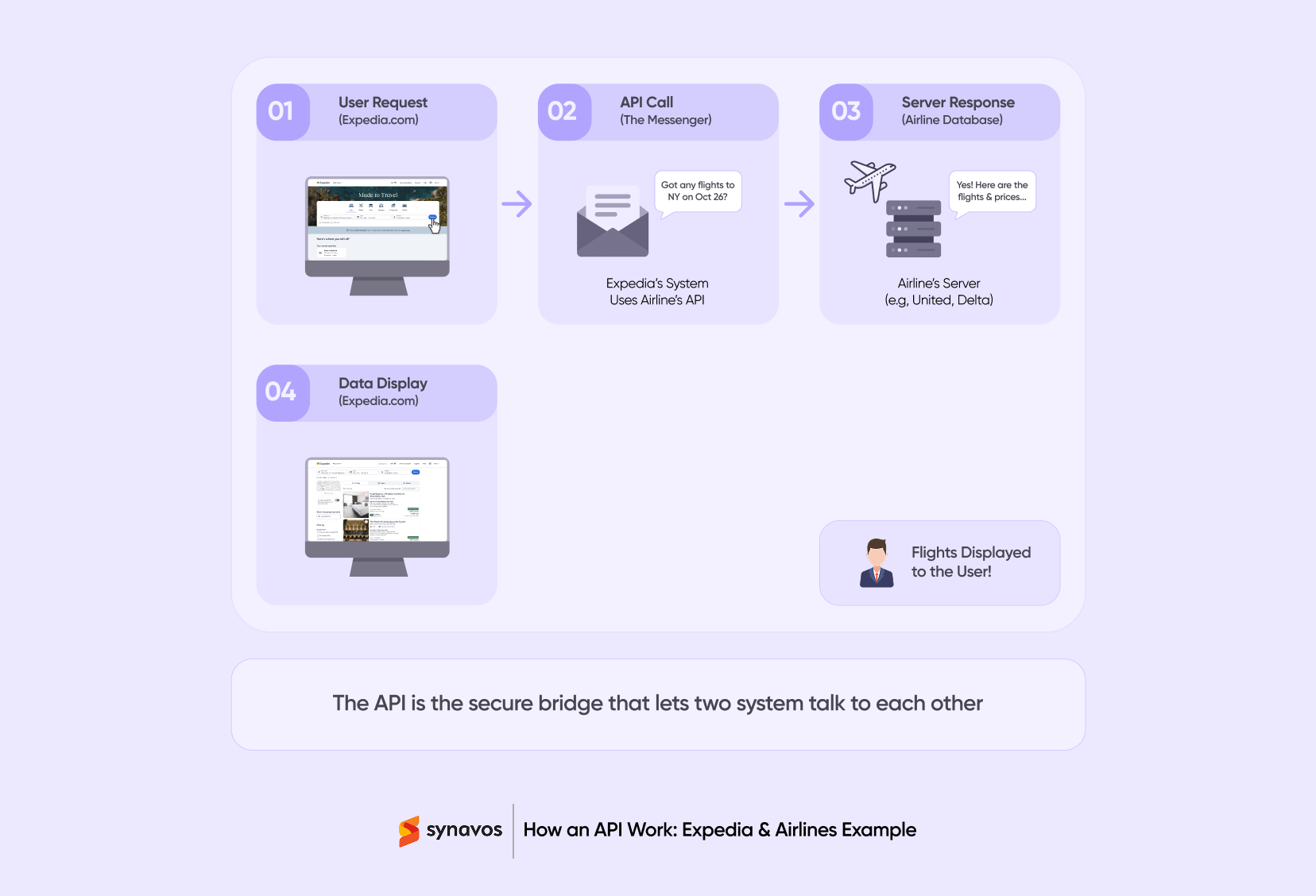
When you search for a flight on a site like Expedia, it doesn't have access to the airline's internal database directly. Instead, it uses an API.
- The Request: You enter your travel dates on Expedia.
- The Messenger (API): Expedia’s API "knocks on the door" of the airline’s system (e.g., United or Delta) and asks, "What flights are available for these dates?"
- The Response: The airline’s system checks its data and sends the prices and times back through the API.
- The Result: Expedia displays that information to you in seconds.
Why this matters:
- Security: The API only shares the specific data requested, keeping the rest of the airline's system private.
- Speed: Everything happens in milliseconds, so you don't have to visit ten different airline websites manually.
- Automation: It allows different companies to work together without ever needing a human to transfer the data.
APIs are used across industries and business models. Ecommerce platforms use APIs to manage inventory, payments, and shipping. SaaS products rely on APIs to connect tools and automate workflows.
In fintech, APIs enable secure data exchange between banks, apps, and financial services. Enterprise systems use APIs to integrate internal platforms and improve operational efficiency.
How APIs Power Modern Websites
Behind almost every modern website is a network of APIs working together. Payment gateways use APIs to process transactions. Authentication services rely on APIs to manage logins and user identities. Content management systems use APIs to deliver content across websites, apps, and other platforms.
APIs also make it possible to integrate analytics tools, customer relationship systems, marketing platforms, and cloud services. This interconnected structure allows websites to function as complete digital ecosystems rather than isolated platforms.
APIs and Enhanced User Experience
APIs play a direct role in improving user experience. Features such as real-time notifications, live data updates, secure logins, and seamless payments rely on APIs working behind the scenes. When APIs are designed and implemented properly, users experience faster load times, smoother interactions, and more reliable functionality.
For example, an ecommerce website can use APIs to show real-time inventory, process payments instantly, and provide shipment tracking without delays.
APIs and Faster Development Cycles
One of the biggest advantages of APIs is speed. Developers can use existing APIs to add features quickly instead of building complex systems from the ground up.
This approach shortens development timelines and reduces costs. Businesses can launch products faster, test ideas quickly, and respond to market changes without major technical roadblocks.
APIs also support parallel development. Different teams can work on frontend and backend components at the same time, improving efficiency and collaboration.
Scalability and Flexibility Through APIs
APIs play a key role in building scalable web applications. As traffic grows or business requirements change, APIs allow systems to expand without major disruptions.
New features can be added by connecting additional services. Existing components can be updated or replaced without affecting the entire platform. This modular approach gives businesses the flexibility to grow and adapt while keeping systems stable.
For companies planning long term digital growth, APIs provide a strong foundation that supports future expansion.
Challenges and Limitations of APIs
Despite their advantages, APIs can introduce challenges. Dependence on third-party services means that downtime or changes outside your control can affect your website. Poorly documented APIs can also slow development and increase errors.
These challenges can be managed through careful planning, proper documentation, and choosing reliable service providers.
Conclusion
APIs have become a core component of modern web development. They connect systems, simplify development, enhance user experience, and support scalable growth. For businesses and developers alike, understanding and using APIs effectively is critical for building powerful and future-ready digital platforms.
From custom API development to integrating third-party tools, Synavos helps businesses create systems that communicate better. Connect with us to see how we can help!