AI chatbots have come a long way from simple scripted responders. In 2026, they are intelligent systems that understand context, adapt to user behavior, and actively contribute to business outcomes. They are no longer just a support layer but a core part of how companies engage customers, automate processes, and scale operations.
As adoption grows, not all chatbots deliver the same value. The difference lies in the features behind them. A well-built AI chatbot is not defined by its presence, but by how effectively it performs across real-world scenarios.
In this blog, we break down the 10 key features that define a successful AI chatbot in 2026 and why they matter for businesses aiming to stay competitive.
What Makes an AI Chatbot Successful in 2026
Success today is not about having a chatbot. It is about having one that actually works in complex, dynamic environments.
Modern AI chatbots are expected to:
- Understand user intent with high accuracy
- Deliver consistent and natural conversations
- Integrate with existing business systems
- Learn and improve continuously
- Scale without compromising experience
A chatbot that lacks these capabilities often leads to frustration instead of efficiency. That is why focusing on the right features from the start is critical.
10 Key Features of a Successful AI Chatbot in 2026
1. Advanced Natural Language Understanding (NLU)
At the core of every effective AI chatbot is its ability to understand language the way humans use it.
In 2026, AI chatbots must need to interpret intent, recognize variations in phrasing, and respond accurately even when queries are not perfectly structured.
This includes:
- Understanding synonyms and conversational language
- Handling spelling variations and informal input
- Supporting multiple languages where needed
Strong NLU ensures users do not have to adjust how they communicate just to get a response.
2. Context Awareness and Memory
A successful AI chatbot does not treat every message as a new conversation.
Context awareness allows the AI chatbot to:
- Remember previous messages within a session
- Understand follow-up questions
- Maintain flow without asking users to repeat information
This creates a smoother experience where conversations feel connected rather than fragmented. It also reduces friction and speeds up problem resolution.
3. Human-Like Conversational Experience
Users expect conversations to feel natural, not mechanical.
Modern AI chatbots are designed to:
- Use a conversational tone
- Adapt responses based on user behavior
- Avoid repetitive or rigid replies
This makes interactions more engaging and helps build trust. When users feel understood, they are more likely to continue the conversation and take action.
4. Omnichannel Presence
Customers interact with businesses across multiple platforms. An AI chatbot should be available wherever the user is.
In 2026, this includes:
- Websites
- Mobile apps
- Messaging platforms like WhatsApp
- Social media channels
A well-developed AI chatbot delivers a consistent experience across all channels while allowing centralized management for businesses.
5. Personalization Capabilities
Generic responses are no longer enough.
AI chatbots can now personalize interactions based on:
- User history
- Preferences
- Behavior patterns
For example, a returning user can receive tailored recommendations or quicker responses based on past interactions. This improves engagement and increases the likelihood of conversion.
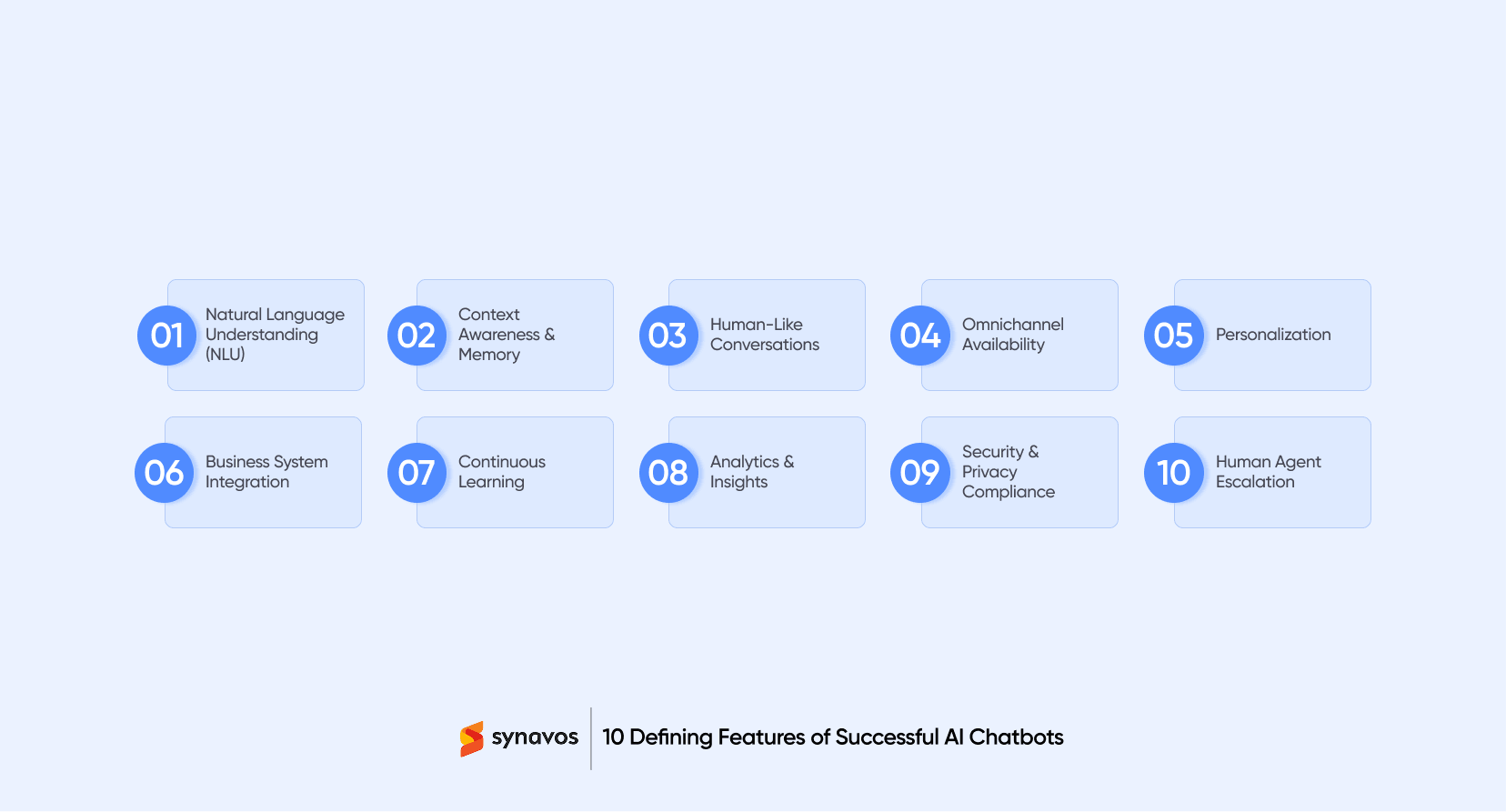
6. Seamless Integration with Business Systems
An AI chatbot should not operate in isolation.
Integration with systems such as:
- CRM platforms
- Helpdesk tools
- Marketing automation systems
allows the AI chatbot to perform real tasks instead of just answering questions.
This enables actions like:
- Creating support tickets
- Updating customer records
- Triggering workflows
As a result, businesses can automate processes and reduce manual effort.
7. Continuous Learning and AI Optimization
A successful AI chatbot improves over time.
Through continuous learning, it can:
- Identify patterns in user interactions
- Refine responses based on feedback
- Reduce errors and improve accuracy
This means the chatbot becomes more effective the more it is used, without requiring constant manual updates.
8. Advanced Analytics and Insights
Every interaction with a chatbot generates valuable data.
A well-developed AI Chatbot provide insights such as:
- Frequently asked questions
- User drop-off points
- Conversation success rates
These insights help businesses understand user behavior and identify areas for improvement. Over time, this data can shape better strategies and enhance overall performance.
9. Security and Data Privacy Compliance
With chatbots handling sensitive information, security is essential.
A reliable AI chatbot should:
- Protect user data through encryption
- Comply with relevant data protection regulations
- Ensure secure data storage and access
Strong security practices not only protect users but also build trust, which is critical for long-term adoption.
10. Smart Escalation to Human Agents
Automation is powerful, but it is not always enough.
A well-designed AI chatbot knows when to:
- Escalate complex queries
- Transfer conversations to human agents
- Pass along context without forcing users to repeat themselves
This balance between automation and human support ensures that users always get the help they need.
Common Mistakes to Avoid When Building AI Chatbots
Even with advanced technology, a poorly implemented AI chatbot can limit results and create frustration instead of value.
Some of the most common mistakes include:
- Over-automating without human fallback
- Using poor training data
- Ignoring user experience and tone
- Failing to integrate with existing systems
Avoiding these mistakes is just as important as choosing the right features.
How to Develop the Right AI Chatbot for Your Business
Developing the right AI chatbot starts with a clear understanding of your business goals and operational needs.
If you want a deeper understanding of the process, you can explore our “AI Chatbot Development Guide for Businesses [2026 Edition]” for a step-by-step breakdown of how to plan and build an effective solution.
Before making a decision, consider:
- What problems you want to solve
- The level of customization you need
- How the chatbot will integrate with your systems
- Whether you need a ready-made solution or custom development
A well-built AI chatbot aligns with your long-term strategy, ensures better user experiences, and measurable business impact over time.
Conclusion
In 2026, the success of an AI chatbot depends on more than just automation. It depends on how well it understands users, adapts to different scenarios, and integrates into business operations.
The features covered in this blog transform an AI chatbot from a simple support tool into a strategic business asset. By investing in these capabilities, businesses can deliver stronger customer experiences, improve operational efficiency, and scale with confidence.
Synavos - Your Go-To Partner for AI Chatbot Development
At Synavos, we help businesses design and develop AI chatbots that are built for real-world performance. Our focus is on creating solutions that are scalable, secure, and aligned with your goals.
If you are planning to build or upgrade your chatbot, now is the time to focus on features that truly make a difference.
Reach out to Synavos today and let’s build an AI chatbot that delivers measurable results for your business.