Chatbots have moved from being a “nice-to-have” feature to a core part of how businesses communicate with customers. Whether it’s answering queries, guiding users, or handling support requests, they now play a key role in delivering fast and efficient digital experiences.
But not all chatbots are built the same. Some follow fixed rules and scripts, while others use artificial intelligence to understand language, context, and intent. This difference has a direct impact on how well they perform and how natural the conversation feels for users.
In this blog, we’ll break down AI chatbots and rule-based chatbots, compare their capabilities, and help you understand which one is better suited for modern business needs in 2026.
What Are Rule-Based Chatbots?
Rule-based chatbots work on fixed instructions. They follow predefined paths that are created by developers. Each user input triggers a specific response based on keywords or buttons.
For example, if a user clicks “track order,” the bot will show order tracking steps. It does not understand anything outside its set rules.
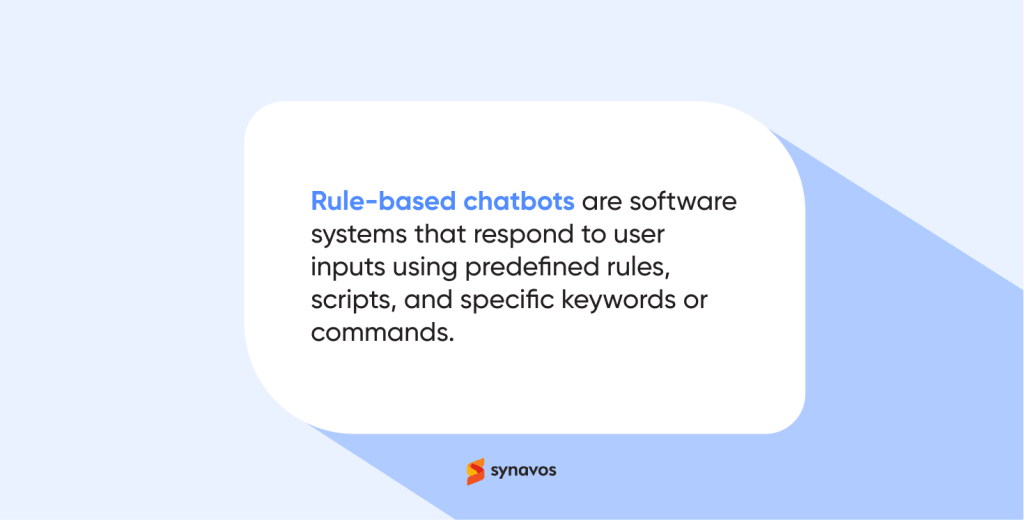
These chatbots are simple and predictable. They are easy to build and manage. But they cannot handle questions that fall outside their programmed flow.
Key Traits of Rule-Based Chatbots
- Work on fixed rules and decision trees
- Depend on keywords or menu options
- Do not learn from conversations
- Best for simple and repetitive tasks
What Are AI Chatbots?
AI chatbots are advanced systems powered by artificial intelligence, natural language processing (NLP), and machine learning. Unlike rule-based bots, they are designed to understand human language more naturally.
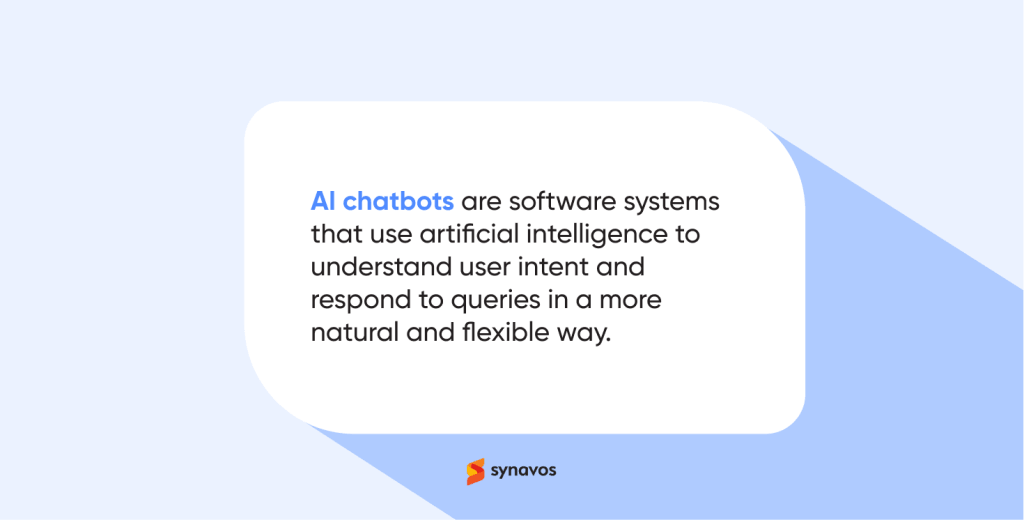
They don’t just match keywords; they interpret intent and context to provide meaningful responses. Over time, they can also learn from interactions and improve performance.
Key Traits of AI Chatbots
- Understand natural language and intent
- Learn from data and past conversations
- Handle complex and open-ended queries
- Provide more flexible responses
To understand how AI chatbots are designed, trained, and deployed in real-world scenarios, read our "AI Chatbot Development Guide for Businesses [2026 Edition]."
Key Differences Between AI Chatbots and Rule-Based Chatbots
The main differences lie in how they process information and interact with users:
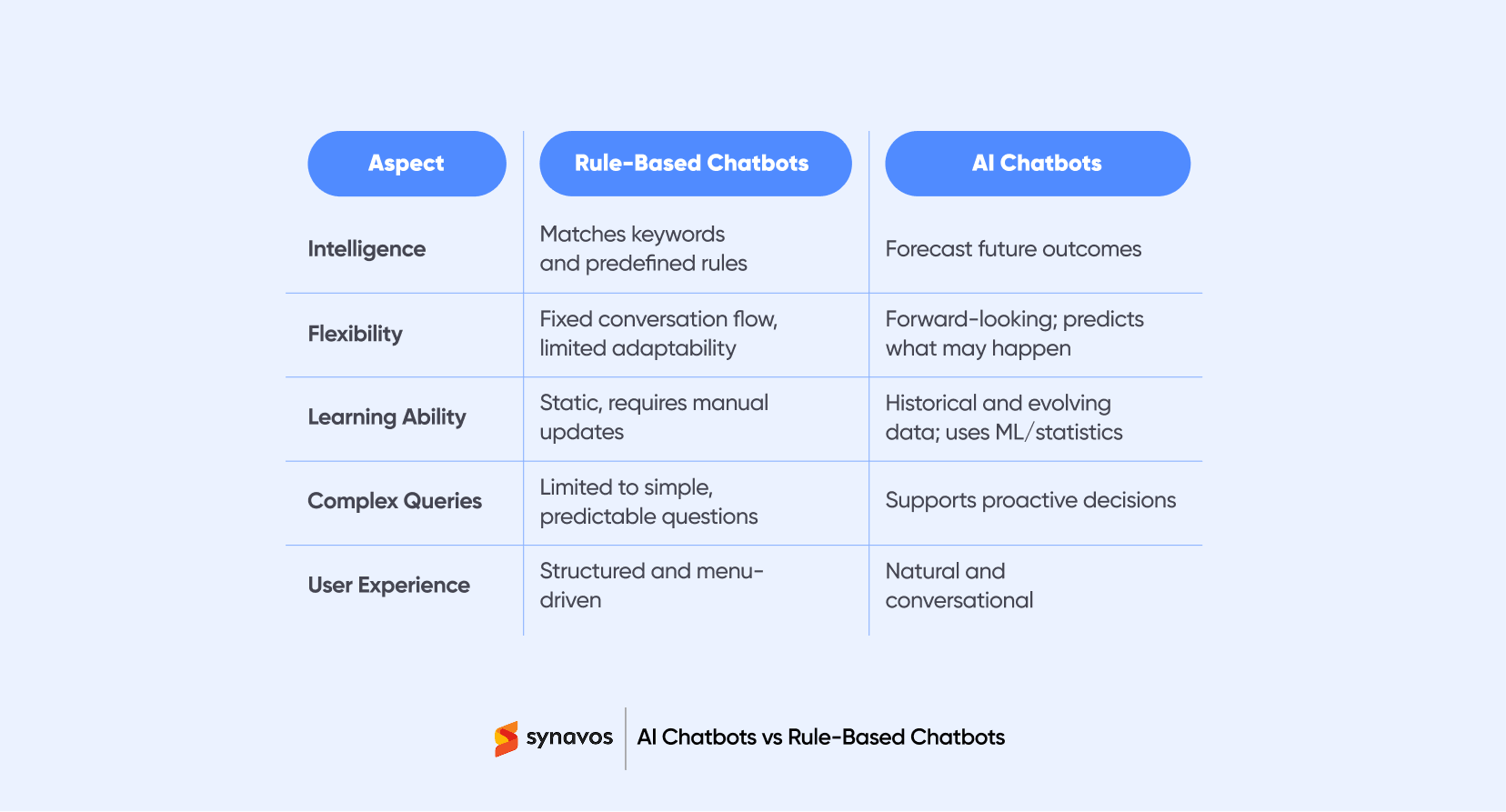
Intelligence
Rule-based chatbots work on fixed logic. They match user inputs with predefined commands, keywords, or button selections. If a user stays within that path, the response is accurate. If not, the bot usually fails to respond properly.
AI chatbots take a different approach. They try to understand what the user actually means, not just what they typed. By analyzing intent and context, they can respond even when the wording changes. This makes them far more capable in real conversations.
Flexibility
A rule-based chatbot follows a strict flow. It moves step by step based on how it was designed. If a user asks something unexpected or jumps between topics, the system struggles to keep up.
AI chatbots handle this much better. They can manage open-ended conversations and shift between topics without breaking the flow. This flexibility makes them useful in situations where user behavior is less predictable.
Learning Ability
Rule-based chatbots do not learn from interactions. Every update has to be done manually. If a new query comes up, someone needs to add a new rule or path to handle it.
AI chatbots improve over time. As they interact with more users, they gather data and refine their responses. This means the system becomes smarter and more accurate without needing constant manual updates.
Handling Complex Queries
Rule-based chatbots are designed for simple tasks. They work best when the question is clear and follows a known pattern. The moment a query becomes layered or unclear, their performance drops.
AI chatbots can process more complex queries. They can break down longer questions, understand intent, and provide meaningful answers. This makes them suitable for customer support, product discovery, and detailed inquiries.
User Experience
The difference in user experience is often the most noticeable.
Rule-based chatbots feel structured. Users usually have to select options or follow a fixed path. This can feel limiting, especially when they cannot find the option they need.
AI chatbots feel more natural. Users can type freely and get responses that sound closer to human conversation. This leads to smoother interactions, higher engagement, and better overall user satisfaction.
Which One Should You Choose? Rule-Based vs. AI Chatbots
The choice depends on your business needs.
Choose rule-based chatbots if:
- Your queries are simple and repetitive
- You want a low-cost solution
- You need something quick to deploy
Choose AI chatbots if:
- Your users ask complex questions
- You want a better conversational experience
- You plan to scale customer interactions
Many businesses also combine both approaches. This creates a balanced system that handles simple tasks with rules and complex queries with AI.
Final Thoughts
Rule-based chatbots and AI chatbots serve different purposes. One focuses on structure and simplicity. The other focuses on intelligence and flexibility.
Choosing between them depends on your goals, budget, and customer needs. For many businesses, the best results come from using a mix of both.
Ready to Choose the Right Chatbot for Your Business?
At Synavos, we help businesses design and develop chatbot solutions that align with their specific needs. Whether you’re looking for a simple rule-based system or a fully intelligent AI chatbot, our team can guide you from strategy to deployment.
Get in touch with us today to build a chatbot that delivers real business results.